Have you ever heard the name Montanus? He was a false prophet from the second century who, like many false prophets, was able to gather a huge following. His followers became known as the Montanists, a schismatic group that caused considerable trouble in the early Church.
It did not really start with Montanus, however, but with a prophetess named Maximilla. Like some sects today, she reportedly insisted that continual wars and tribulations were coming and that the world would end when she died. Yet these things never happened—not even in the days following her death. This is typical of the false claims made by some Christian sects and pagan groups, often injecting fear into their followers as a means of recruitment.
Her supposed “gift” of prophecy was believed to have passed to Priscilla and Montanus. Montanus claimed to have once been a Christian priest, although this may simply have been his own invention, perhaps the result of his spiritual delusion.
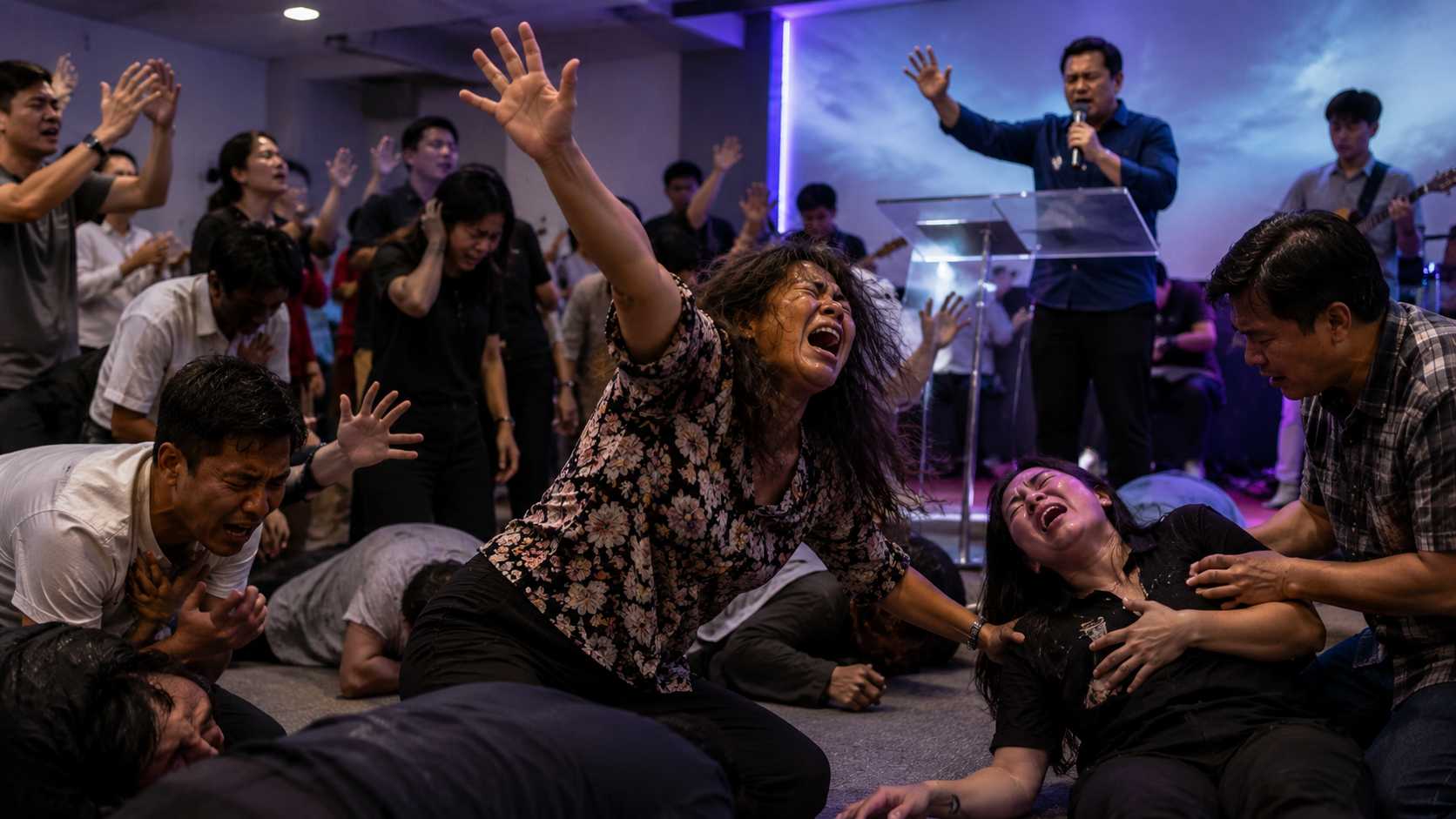
The three prophets reportedly entered into what was described as a prophetic frenzy: first appearing distraught with terror, then becoming silent, followed by a passivity of thought and finally an uncontrollable madness. They believed themselves to be possessed by God and consequently uttered blasphemies, speaking as though they were God Himself. Montanus, for example, reportedly claimed to be the Father, the Son, and the Holy Spirit—the omnipotent God—not merely an angel or messenger, but the Father Himself. He also claimed to be the fulfillment of the Second Coming.
The Montanists taught that God, having been unable to save the world through Moses and the Prophets, took flesh from the Virgin Mary and, in Christ His Son, preached and died for us. Then, because He supposedly could not accomplish the salvation of the world through this second method, the Holy Spirit descended upon Montanus, Prisca, and Maximilla, giving them a fullness that even St. Paul had supposedly not possessed.
Why were so many faithful convinced by them? At first, they preached things that sounded orthodox: fasting, abstinence, chastity, and martyrdom. The same thing can happen today. A sect may convince people through specific practices that initially sound reasonable—such as prohibiting alcohol, forbidding certain foods, or imposing other strict rules. But once false prophecy and heretical teachings enter the picture, the danger becomes clear.
The Catholic communities therefore tried to stop Montanus from troubling the faithful and eventually excommunicated his followers. The false prophets were regarded as being under demonic influence, and attempts were reportedly made to exorcise them, although these attempts did not ultimately materialize.
Besides false prophecy—and this is also very common among sects—it was believed that the Montanists collected money in the form of offerings. It may, in the end, have been partly about money, just as it can be with some religious movements today.
When challenged about their uncontrolled frenzy, the Montanists appealed to distorted interpretations of Sacred Scripture, such as Genesis 2:21: “The Lord sent an ecstasy upon Adam”; Psalm 115:2: “I said in my ecstasy”; and Acts 10:10: “There came upon Peter an ecstasy.” But these passages proved neither that an ecstatic state of excitement was proper to sanctity nor that such a state was the appropriate condition for prophecy.
In our own day, Acts 10 is sometimes invoked by those who claim to have been “possessed by God” or to have experienced a similar state of “madness.” Certain manifestations associated with modern claims of speaking in tongues and ecstatic religious experiences can certainly invite comparison with the Montanist phenomena, although the historical and theological circumstances are not identical.
There is no certainty about how the Montanist prophets died, but one report claims that Montanus and Maximilla both hanged themselves. Whether or not that particular report is historically reliable, the story serves as a reminder that false prophets do not ultimately possess the glory they claim for themselves. The fame of false teachers eventually comes to an end—and, if they do not truly repent of their sins, they will face the judgment of God.
Note: The above is my summary of the New Advent entry on the Montanists. You can read the full entry here.
The Montanists of Today
Many charismatic services today follow a pattern that should make Catholics exercise caution. A leader presents himself as specially gifted by the Holy Spirit, and people become increasingly dependent on his signals, commands, or supposed prophetic authority. People may fall, shake, cry uncontrollably, shout, speak unintelligibly, laugh hysterically, or display other extraordinary manifestations. The atmosphere can become self-reinforcing, while discernment is replaced by spectacle.
This is where the history of Montanism offers a warning. Montanus and his prophetic associates claimed extraordinary manifestations of the Spirit and prophetic authority. The Church did not teach that every supernatural claim should be accepted simply because someone invokes the Holy Spirit.
This does not mean that every charismatic manifestation is fake. The Church recognizes genuine charisms, but genuine spiritual gifts do not make every alleged manifestation authentic. Catholics must therefore be cautious when emotional excitement and confidence in a charismatic leader begin to replace sound doctrine, reverence, order, and fidelity to the Church.
The Church was already dealing with such claims in the second century, not long after the Apostles. These phenomena come and go, often appearing in new forms. We therefore need not panic or become fascinated by them. Discern. Warn family and friends calmly if they are being drawn into spiritually unhealthy events. Do not become angry or discouraged; sometimes the wisest response is simply to walk away.
Above all, remember Pentecost. The descent of the Holy Spirit upon Mary and the Apostles was a unique event in salvation history. The Apostles did not organize or manufacture it; Christ fulfilled His promise to send the Paraclete. No preacher—and not even a Catholic priest—can schedule another Pentecost or reproduce the Holy Spirit’s action through a planned venue, program, or healing service. The Holy Spirit is God, the third Person of the Holy Trinity. He is not a force that can be summoned or manipulated.
Extraordinary experiences are temporary goods. They are never worth risking our faith or, ultimately, our salvation.



Leave a Reply