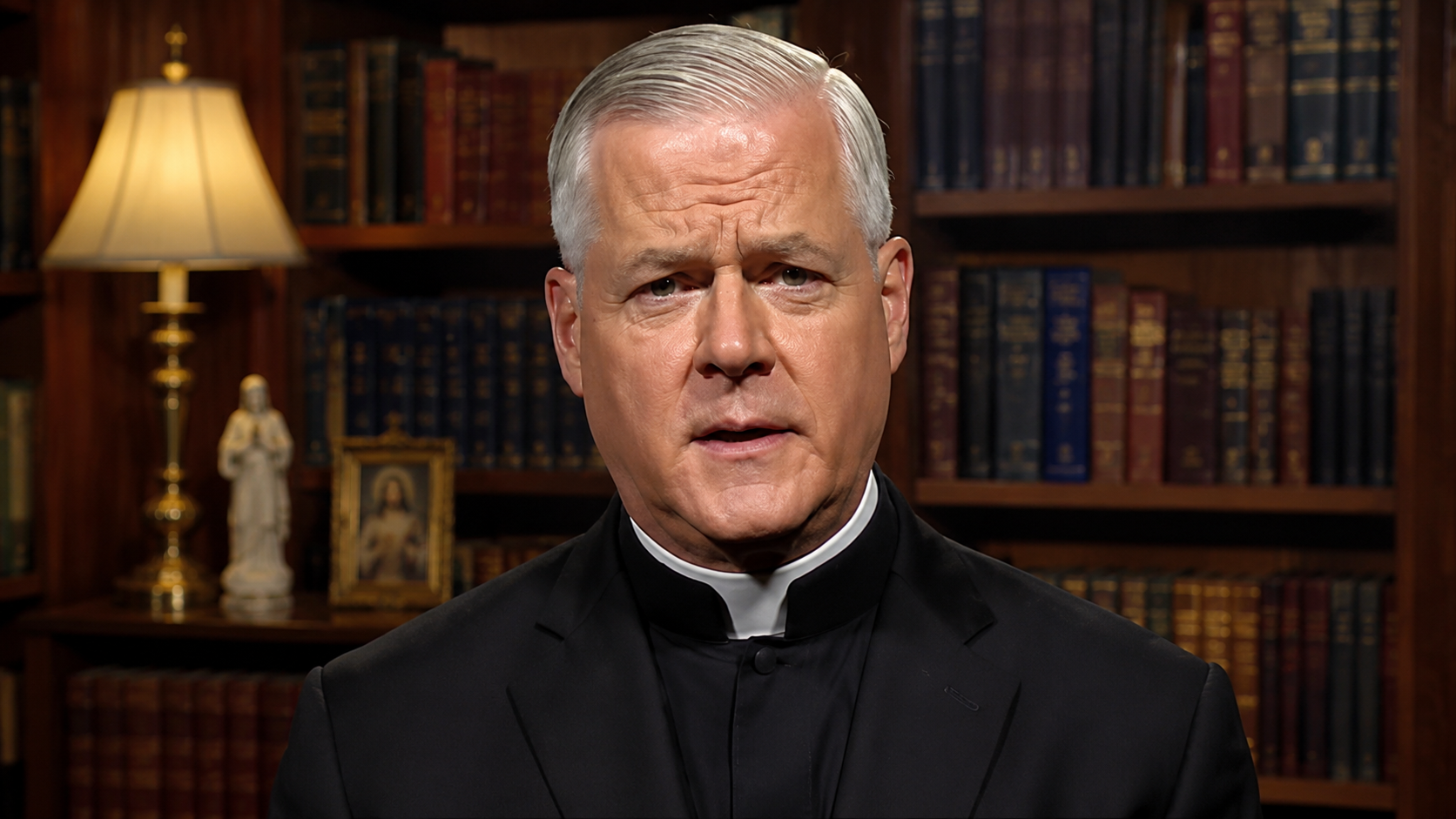
Canon lawyer Father Gerald Murray says the Vatican’s recent decree following the unauthorized episcopal consecrations by the Society of St. Pius X (SSPX) reaches two very different conclusions.
According to Murray, the six bishops are unquestionably and publicly excommunicated. He explains that by proceeding with episcopal consecrations without a pontifical mandate, they incurred the automatic penalty attached to such an act under canon law. The Vatican’s decree merely declared that the penalty had already been incurred.
However, Murray argues that the Vatican’s accompanying explanatory note goes beyond what the decree itself legally establishes.
His principal criticism is that the decree explicitly names only the six bishops and does not formally list the SSPX’s approximately 700 priests as excommunicated. While the accompanying explanatory note refers to the priests as schismatics and discusses the status of laypeople who adhere to the Society, Murray argues that such a note cannot itself impose or declare new canonical penalties.
According to him, an explanatory note exists to clarify a decree, not to expand its legal effects. For that reason, he believes the priests have not been publicly declared excommunicated, even if the Holy See believes they have incurred an automatic penalty.
Murray likewise argues that lay Catholics are not automatically excommunicated merely for attending an SSPX chapel or sympathizing with the Society. Penal canon law requires greater precision. A canonical penalty must be tied to a specific external act, not merely to an internal attitude or a vague notion of “adherence.” In his view, the Vatican’s documents fail to identify clearly what concrete actions by priests or laity would constitute formal adherence to schism.
However, this overlooks the decree’s own explicit warning: “Clerics and lay faithful are admonished not to adhere to the schism of the Priestly Fraternity of St. Pius X, because they would ipso facto incur the penalty of excommunication latae sententiae.” The decree itself therefore makes clear that clerics and lay faithful who formally adhere to the SSPX’s schism incur excommunication, even if they are not individually named.
He also questions the explanatory note’s treatment of the sacraments. Murray argues that it cannot simply nullify permissions previously granted by Pope Francis regarding SSPX confessions and marriages. Those permissions, he says, were established by papal acts and therefore would require another papal act to revoke them.
While Murray’s canonical analysis deserves careful consideration and comes from an experienced canon lawyer, the overall intention of the Holy See appears unmistakable. The decree, explanatory note, and accompanying implementation documents consistently indicate that Rome considers not only the six bishops but also those who formally adhere to the Society’s schism to be subject to the consequences outlined by the Dicastery.
This is further reflected in the practical norms issued by the Holy See, which already provide bishops with procedures for receiving both clergy and laity who wish to be reconciled with the Catholic Church. Those provisions would make little sense unless Rome intended the measures to extend beyond the six bishops themselves.
Moreover, the SSPX’s own public response appears to acknowledge that the Vatican’s action affects the Society as a whole. In its letter to Pope Leo XIV, the Society speaks as though the sanctions and their consequences apply not merely to the six bishops but to the entire fraternity, suggesting that even the SSPX understands the Holy See’s intention in that way.
Whether Murray’s interpretation is ultimately correct remains a matter of canonical debate. His reasoning reflects a well-established principle of canon law that penal laws are interpreted strictly and that decrees imposing or declaring penalties should clearly identify both the persons affected and the acts that incur those penalties.
At the same time, it should not be forgotten that on another occasion, Murray has also criticized Pope Benedict XVI‘s 2009 lifting of the SSPX bishops’ excommunications, arguing that it likewise failed to follow the proper canonical process. His present critique, therefore, is consistent with his longstanding insistence that canonical procedures must be observed regardless of the outcome or the parties involved.
Ultimately, if the Holy See determines that further clarification is necessary, it has the authority to issue an authentic interpretation or additional decrees removing any remaining ambiguity.
In summary, Fr. Murray does not dispute the excommunication of the six bishops. His position is that the Vatican’s documents, as presently written, do not legally accomplish everything they appear to intend regarding SSPX priests and lay supporters. Nevertheless, the intention of the Holy See to address the broader body of those who formally adhere to the Society appears clear from the totality of the documents and the reconciliation procedures issued alongside them.



Leave a Reply