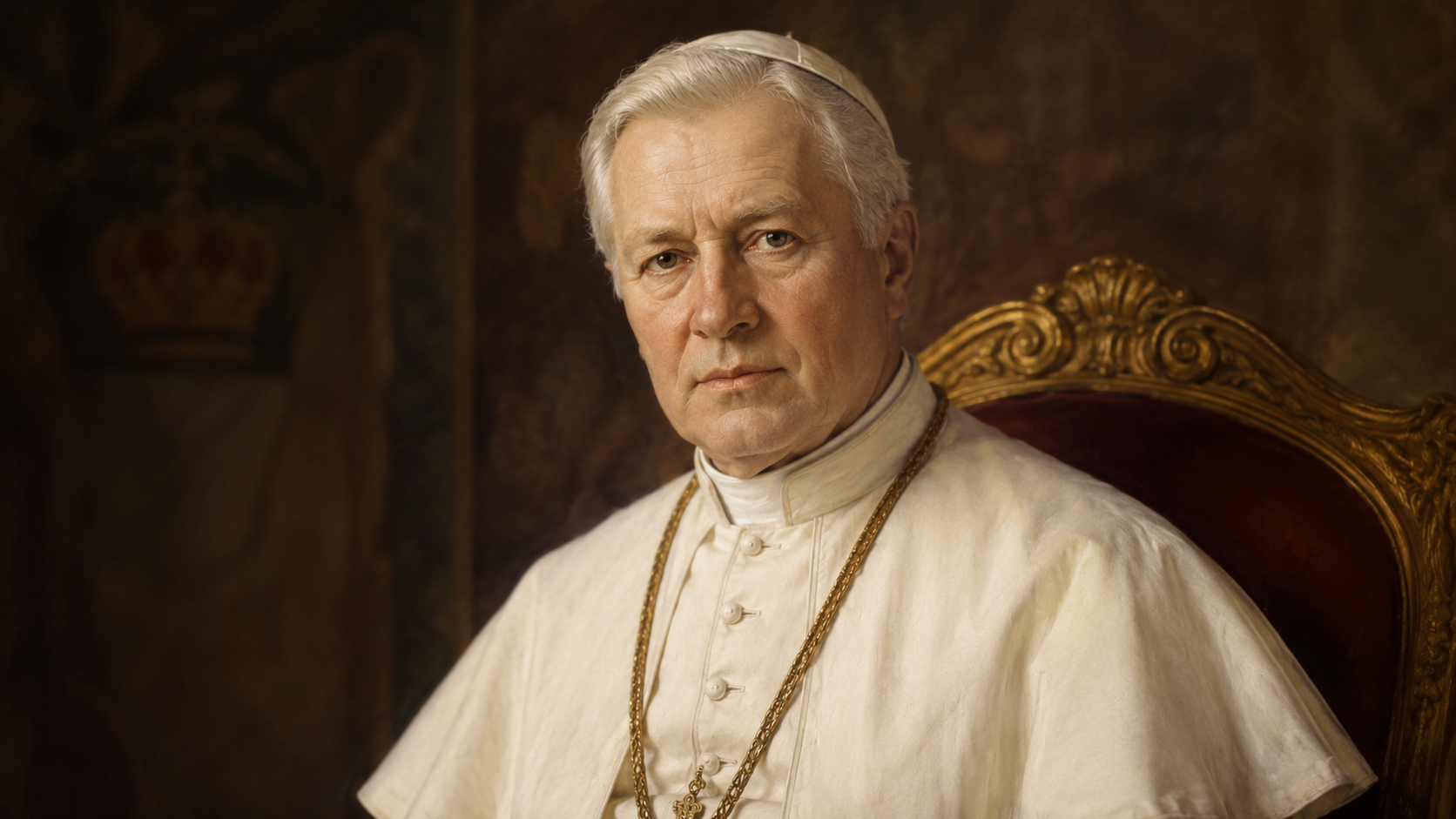
The Society of Saint Pius X proudly bears the name of Pope Saint Pius X and invokes him as its patron. Yet one of the saint’s clearest and most forceful exhortations to priests was precisely about their duty to love—and obey—the Pope. The irony is especially striking now that the Society’s bishops, priests, and lay faithful formally attached to it have just been declared excommunicated by the Holy See for adhering to its schism. His words therefore deserve renewed attention.
In his address to the priests of the Apostolic Union on November 18, 1912, Saint Pius X first reminded priests not to neglect their own sanctification:
“Distracted by so many other occupations, it is easy to forget the things that lead to the perfection of the priestly life; it is easy to delude ourselves into believing that by caring for the salvation of others’ souls, we are also purposely working towards our own sanctification… To sanctify others we must not neglect any of the means proposed for sanctifying ourselves.”
He then identified what he considered one of the defining characteristics of a ‘sanctified’ priest:
“The characteristic of the priests of the Apostolic Union and their particular motto must be, and in fact is, love for the Pope.”
Why? Because the Pope is “the guardian of dogma and morality,” “the custodian of the principles that make families honest, nations great, and souls holy,” “the leader under whom no one feels tyrannized, because he represents God himself,” and “the father par excellence.”
Then comes the question that every priest—and indeed every Catholic—should ponder:
“And how should we love the Pope? Not in word or tongue, but in works and truth.” (1 John 3:18)
Saint Pius X explains exactly what this means. To love the Pope is to conform ourselves to his mind, carry out his wishes, and faithfully interpret his intentions. If we truly love him, we obey him.
He leaves no room for ambiguity:
- One does not argue about what the Pope orders.
- One does not ask how far obedience must extend.
- One does not claim the Pope has not spoken clearly when he has already expressed himself in speeches, letters, and public documents.
- One does not excuse disobedience by saying it is really “those around the Pope” who are speaking.
- One does not restrict the authority that belongs to the Roman Pontiff.
- One does not place the opinions of even learned men above the Pope’s authority.
- And in one of his strongest statements, he declares that those who dissent from the Pope “are not saints, because a saint cannot dissent from the Pope.”
Saint Pius X concludes with words that are astonishingly relevant:
“This is the outburst of a grieving heart… to deplore the conduct of so many priests, who not only allow themselves to discuss and scrutinize the Pope’s wishes, but are not ashamed to resort to impudent and brazen disobedience, causing such scandal to good people and such ruin to souls.”
This is what makes the present situation so striking.
A priestly fraternity that bears the name of Saint Pius X should be among the first to embody his teaching on love for the Roman Pontiff. Instead, many invoke his name while doing the very things he explicitly condemned: scrutinizing the Pope’s commands, questioning his authority, attributing his decisions to those around him, and justifying disobedience.
Since the now-excommunicated SSPX rejects the very obedience to the Roman Pontiff that Pope Saint Pius X so forcefully taught, then the group should have the honesty to change its name. The irony is as profound as it is shameful.
To honor Saint Pius X is not merely to preserve the traditional liturgy or quote his writings. It is also to embrace his unwavering conviction that authentic Catholic tradition includes filial love for the Successor of Peter—not merely in word or tongue, but in works and in truth.



Leave a Reply