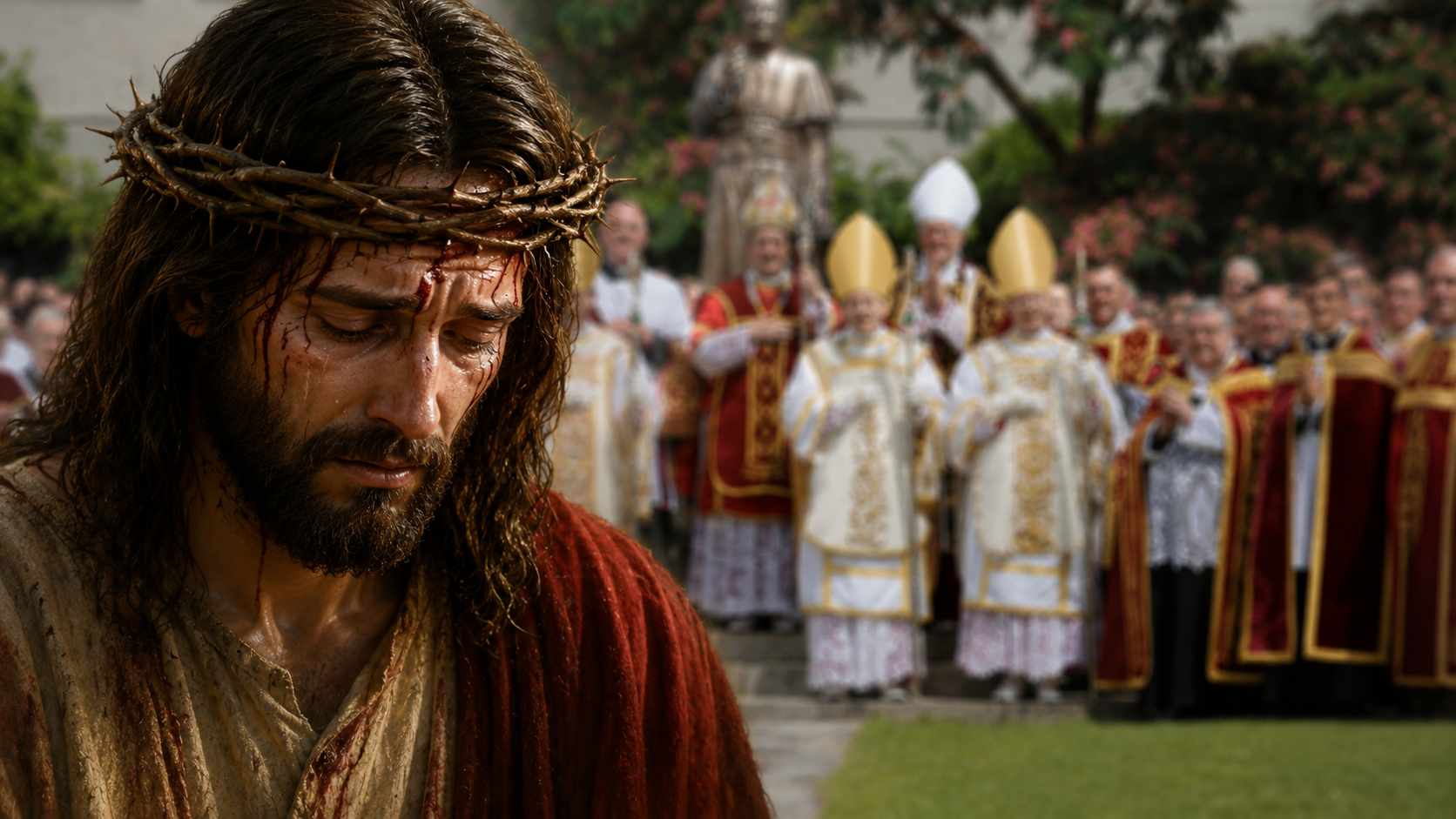
The Church’s recent declaration following the unauthorized episcopal consecrations of July 1, 2026, marks a decisive moment in the long-standing dispute surrounding the Priestly Society of Saint Pius X (SSPX). The Dicastery for the Doctrine of the Faith has confirmed that the bishops involved in the illicit consecrations incurred excommunication. It has further clarified that priests who adhere to the SSPX’s schism are likewise excommunicated, while lay faithful who formally adhere to the Society’s schismatic position also incur latae sententiae excommunication.
Who Is Considered Formally Adherent?
The Church also makes an important distinction. Formal adherence is not the same as simply attending an SSPX chapel, preferring the Traditional Latin Mass, or seeking traditional spirituality. Rather, it involves knowingly and deliberately embracing the SSPX’s schismatic position against the authority of the Roman Pontiff and the Church’s Magisterium. Because canonical penalties require sufficient knowledge and deliberate consent, imputability is assessed on a case-by-case basis.
The Dicastery specifically notes that those who attended SSPX chapels only for liturgical or spiritual reasons, or who never rejected the authority of the Pope or the Church’s Magisterium, are not ordinarily considered imputable. Such faithful need only approach a priest in full communion with the Church and resolve not to continue attending the SSPX.
The Path Back to Full Communion
For those who have formally adhered to the schism and wish to return to full communion, the Church has provided a clear path of reconciliation under the authority of the local diocesan bishop.
The process is straightforward:
- Present oneself to the diocesan bishop (or other competent local Ordinary) and express the desire to return to full communion with the Catholic Church.
- Sign and submit the Profession of Faith and the Formula of Adherence, affirming the Catholic faith, fidelity to the Roman Pontiff, acceptance of the Church’s Magisterium—including the Second Vatican Council as authentically interpreted by the Church—and the legitimacy and validity of the post-conciliar liturgical rites.
- The local Ordinary will review the case and determine the appropriate manner and time to receive the person back into full visible communion with the Church.
For lay faithful, the process ends there. Unlike priests, who must also petition the Holy Father for the remission of censures and undergo a probationary period before incardination, lay faithful are reconciled under the authority of their local bishop.
A Mother’s Invitation
The Church’s response is therefore not one of exclusion but of hope. Even after the grave wound of schism, she continues to extend a mother’s invitation to reconciliation. The door remains open to all who are willing to embrace humility, renew communion with the Successor of Peter, and return to the full sacramental life of the Catholic Church.
True fidelity to Catholic Tradition has always included fidelity to the visible unity of the Church. Those who return need not abandon their love for the Traditional Latin Mass, which remains available in communities fully united with the Holy See. In this way, they can preserve their attachment to tradition while remaining in full communion with the universal Church.
A Time for Humility
This moment also calls for honest self-examination. Humility has always been the mark of the saints. There is no shame in acknowledging that a mistake has been made; rather, it takes genuine courage to admit error and seek reconciliation.
Now that the competent authority of the Church has spoken, it is difficult to maintain that the Church’s decrees simply do not apply or can be set aside. Ignoring a judgment does not nullify its canonical effects. Reality remains what it is, regardless of how it is received.
For those who sincerely profess the Church’s perennial teaching that extra Ecclesiam nulla salus (“outside the Church there is no salvation”), this moment should naturally become an invitation to reconciliation rather than continued separation. The Church is not asking anyone to abandon a love for tradition, but to live that love within the visible unity of the Church founded by Christ and under the Successor of Peter.
In the end, the choice is not between tradition and the Church, but between remaining in separation or embracing full communion. Pride prolongs division, while humility opens the way to reconciliation. The Church continues to hold the door open, waiting to welcome home all who freely choose to return.



Leave a Reply