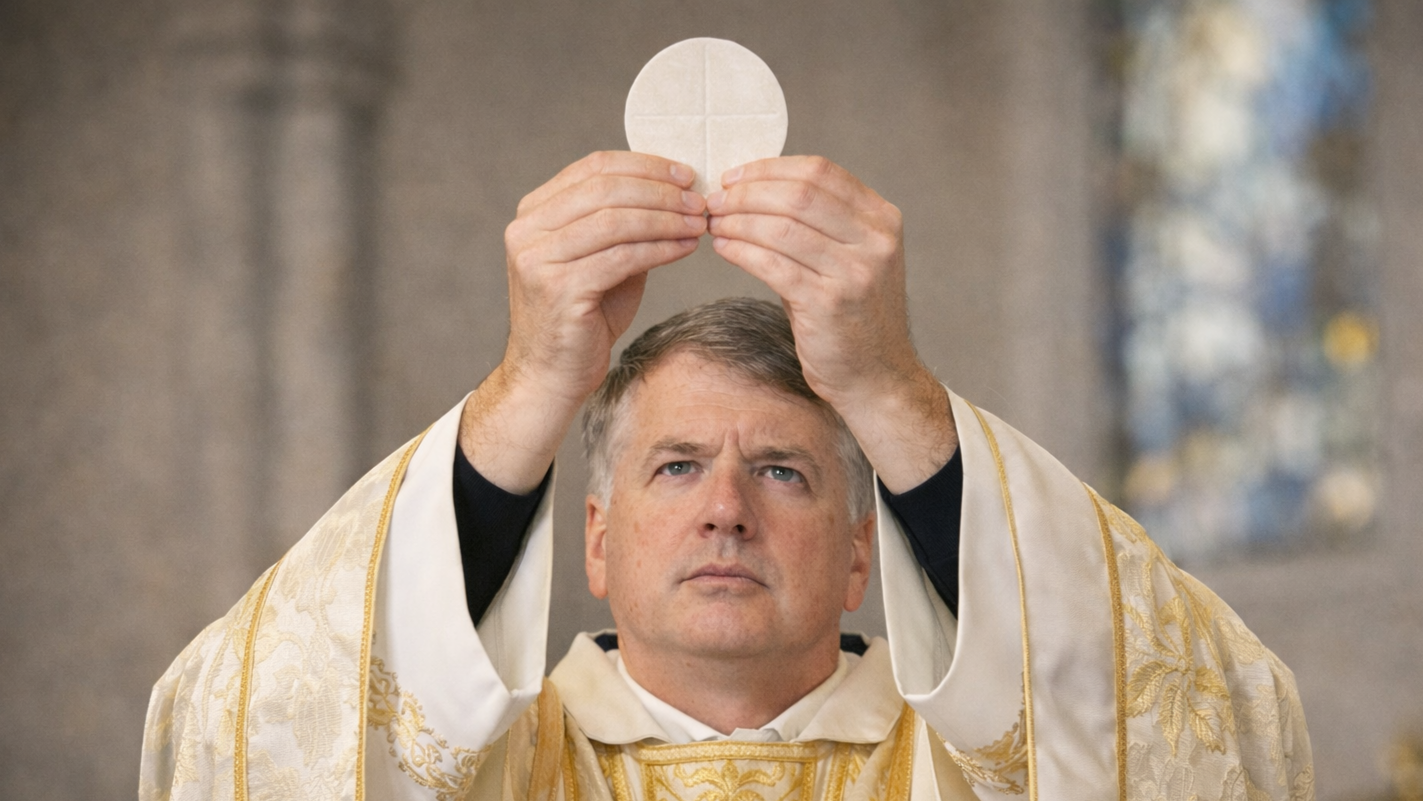
Archbishop calls for the restoration of kneelers and renewed Eucharistic reverence as Sydney prepares for the 2028 Eucharistic Congress
Reading Archbishop Anthony Fisher OP’s pastoral letter, “Adoring the Eucharistic Lord: Let Us Kneel Before the God Who Made Us,” I find myself encouraged in a way that goes beyond liturgical policy. His call to restore kneelers in churches where they have been removed feels like something deeper: a quiet but real sign that the Church is still capable of listening to the faithful who long for reverence, tradition, and clarity about the Eucharist.
The Archbishop’s directive is straightforward. Kneelers are to be restored, Eucharistic adoration is to be strengthened, and the faithful are to be better formed in the sacred posture of worship. But for many of us who care deeply about the Church’s liturgical life, this is not just about furniture or architecture. It is about what those physical signs teach us about what—and Who—we believe is truly present on the altar.
Kneeling has always been more than a gesture. It is a confession of faith written in the body. When we kneel, we are not performing nostalgia; we are acknowledging reality: that Christ is truly present in the Blessed Sacrament. To see a bishop explicitly call for the restoration of this visible language of reverence feels, at least to me, like a moment of hope.
In a time when belief in the Real Presence often seems weakened or taken for granted, small but concrete decisions like restoring kneelers matter more than they appear to. They reintroduce into parish life a physical reminder that worship is not casual, and that the Eucharist is not ordinary bread.
What stands out even more is that this move reflects a growing awareness within parts of the Church that the desires of traditionally minded Catholics are not being ignored. There are still bishops willing to speak plainly about reverence, adoration, and the need to recover practices that formed centuries of Catholic faith. For those of us attached to tradition, this feels like a recognition that our concerns are not outside the life of the Church, but part of its living heartbeat.
I also see in this development something broader than one archdiocese. It can serve as an encouragement to Catholics in other dioceses who continue to ask for greater Eucharistic reverence. There is a quiet but persistent truth here: when there is honest and sustained hunger for reverence and tradition among the faithful, God does not ignore that thirst. He guides His Church, often gradually, toward what helps deepen faith.
The restoration of kneelers may seem small to some. But in the life of the Church, small visible signs often carry deep theological weight. They shape how we pray, how we believe, and ultimately how we understand God’s presence among us.
For me, this is not just about kneeling again in wood and stone. It is about a Church slowly remembering how to bow before its Lord—and in doing so, finding again the confidence to stand and proclaim Him to the world.




Leave a Reply