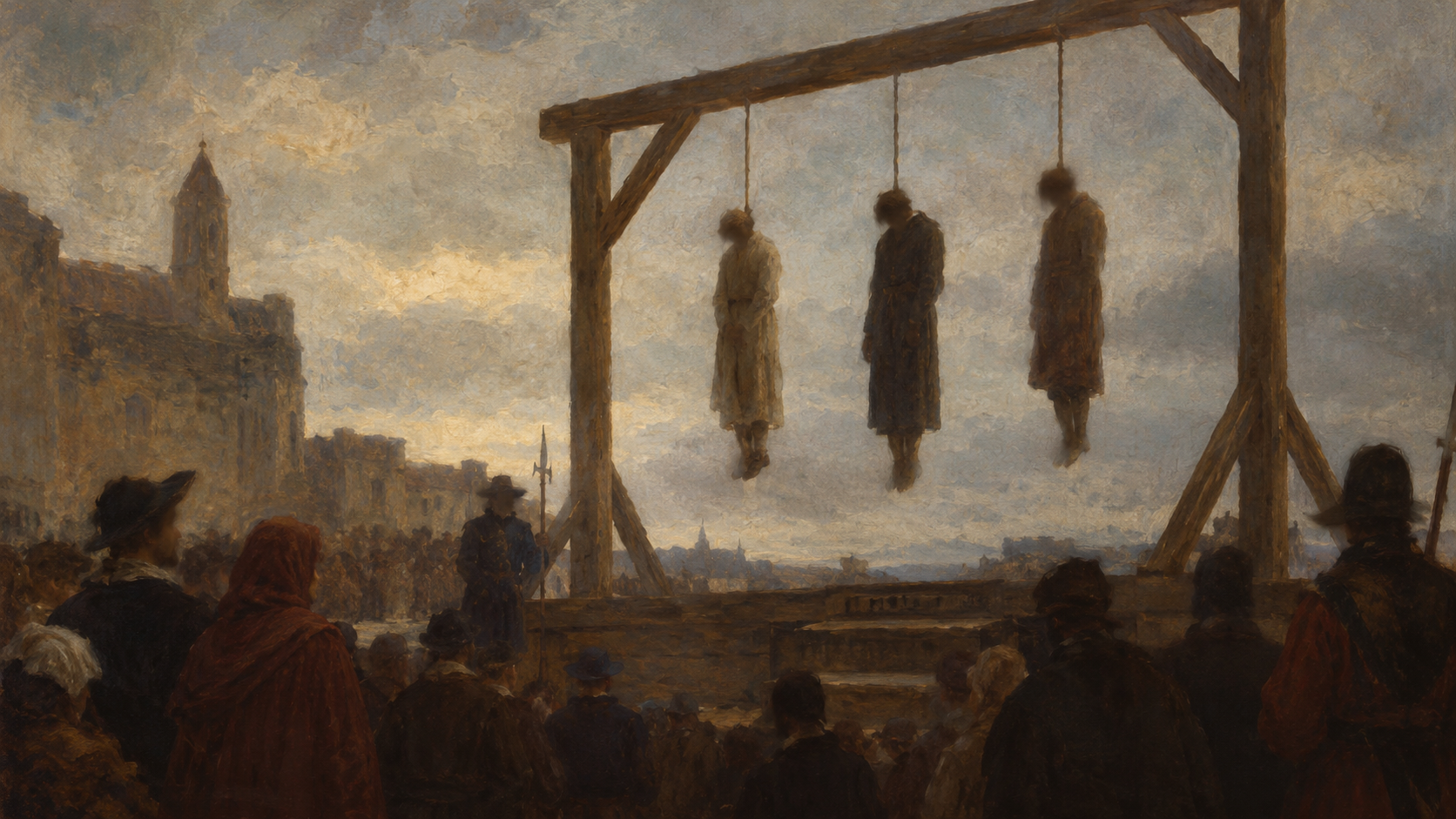
Whatever your position on the death penalty, one thing is clear: you cannot settle this debate simply by quoting a few Bible verses. Passages in both the Old and New Testaments have been cited in support of capital punishment, while others emphasize mercy, forgiveness, repentance, and respect for human life. This biblical tension is discussed in detail in Part 2 – Why the Bible Alone Cannot Settle the Death Penalty Debate.
So, if the Bible alone cannot settle this debate, to what should Catholics turn today? The Catholic Church. This does not mean ignoring Sacred Scripture. Rather, Christ entrusted His Church with the authority to teach (Mt 16:18, 28:20)and authentically interpret Sacred Scripture (CCC 85, 100) under the guidance of the Holy Spirit.
Indeed, throughout much of Church history, popes, theologians, and catechisms recognized that civil authorities could lawfully impose the death penalty for sufficiently grave crimes. The underlying principle was that legitimate governments have the responsibility to protect the common good and punish wrongdoing.
This brings us to two distinct considerations: (1) the prohibition against murder and (2) the recognition that civil authorities could decide whether to impose the death penalty under certain conditions. The prohibition against murder has never changed and will never change. What has changed is the Church’s judgment regarding how civil authorities should handle the matter of capital punishment.
Over time, however, the Church increasingly emphasized the dignity of every human person, including those who have committed terrible crimes, and the possibility of protecting society without executing offenders. The development of this teaching is discussed in detail in Part 3 – The Popes and Their Positions on the Death Penalty.
One significant step in this development came in 1995, when Pope St. John Paul II explained in Evangelium Vitae that cases in which execution is absolutely necessary to defend society are extremely rare, if not practically nonexistent, given modern penal systems. He later called for an end to the death penalty. Pope Benedict XVI continued this appeal, urging governments to eliminate capital punishment and reform their penal systems in ways that respect prisoners’ human dignity.
The teaching developed further in 2018, when Pope Francis revised paragraph 2267 of the Catechism of the Catholic Church, declaring that the death penalty is inadmissible because it attacks the inviolability and dignity of the human person. The Congregation for the Doctrine of the Faith explained this as an authentic development of Catholic doctrine. Pope Leo XIV reaffirmed this teaching on October 10, 2026, stating that the common good can be protected and justice achieved without capital punishment.
The reasoning behind this development is that, whereas earlier societies faced different practical limitations in protecting the public and restraining dangerous offenders, effective alternatives are now considered available. Consequently, the Church teaches that the death penalty is inadmissible. This is the moral judgment Catholics are now called to understand and follow.

Whether you personally agree with Pope John Paul II, Benedict XVI, Francis, or Leo XIV on other matters is beside the point. If you are Catholic, you should humbly take the Church’s current magisterial teaching seriously (CCC 87)rather than dismissing it simply because it differs from your personal opinion.
Those who hold public office have a particularly serious responsibility to consider this teaching when formulating laws and policies concerning capital punishment. Likewise, Catholics who are involved in public executions in non-Catholic countries should make every reasonable effort to avoid participating in them, in accordance with the Church’s teaching on the dignity of human life.
Nevertheless, I have reservations about this development. Since capital punishment is not intrinsically evil, I disagree with the most recent popes that, after 19 centuries, the death penalty should now become inadmissible simply because modern detention facilities can supposedly ensure that offenders will no longer pose a threat to society. My disagreement stems from the fact that modernization has also enabled highly complex and organized criminal networks to find new ways to cause harm, even when the criminals themselves are held in the most secure prisons.
However, this is as far as I can go in criticizing the Magisterium’s recent decision. Since the Petrine Office has determined that the death penalty is inadmissible, and because this teaching does not directly contradict Scripture and Tradition, we ought to humbly acknowledge it as a teaching we are called to accept through the authority God entrusted to His Church on earth.
It is important to note, however, that this same reasoning cannot be applied to other magisterial documents, such as Fiducia Supplicans and Amoris Laetitia. In my view, both defend sexual sins and go against Scripture and Tradition. For this reason, I believe these documents should be condemned by Catholics.
At the same time, accepting the Church’s current teaching on capital punishment does not mean opposing justice. Criminals should be held accountable, and society must be protected from those who pose a danger to others. Victims and their families deserve justice, care, and support. Offenders, meanwhile, should be treated humanely, deprived of the freedom and privileges necessary to protect the public, and given the opportunity to repent. Punishment should be just and proportionate, not an excuse for cruelty or revenge. We can defend the dignity of human life while demanding justice for victims, insisting that criminals face the consequences of their actions without declaring them beyond redemption.
Ultimately, as a Catholic with traditional views, I recognize that the inadmissibility of the death penalty may not align with my convictions. Nevertheless, I need to submit to this teaching and defend it. This is where humility plays a significant role in our lives as Catholics.
Summary of My Points on the Death Penalty
- The Bible alone cannot settle this debate. Scripture contains both the prohibition against unjust killing and the recognition of civil authority to impose punishment.
- The prohibition against murder remains unchanged. However, the exercise of civil authority over punishment can develop and change.
- Recent popes have declared the death penalty inadmissible, citing modern penal systems and the possibility of protecting society without executing offenders.
- My disagreement: Even in modern times, organized criminals can continue to orchestrate serious crimes from prison, causing further harm.
- Ultimately, Catholics should take the Church’s current teaching seriously while recognizing that the death penalty is not intrinsically evil in itself.
Note: This blog post is one of a three-part series:
Part 1 – Humbling Oneself on the Inadmissibility of the Death Penalty
Part 2 – Why the Bible Alone Cannot Settle the Death Penalty Debate
Part 3 – The Popes and Their Positions on the Death Penalty
Recommended Book: By Man Shall His Blood Be Shed: A Catholic Defense of Capital Punishment by Edward Feser (2017)






Leave a Reply