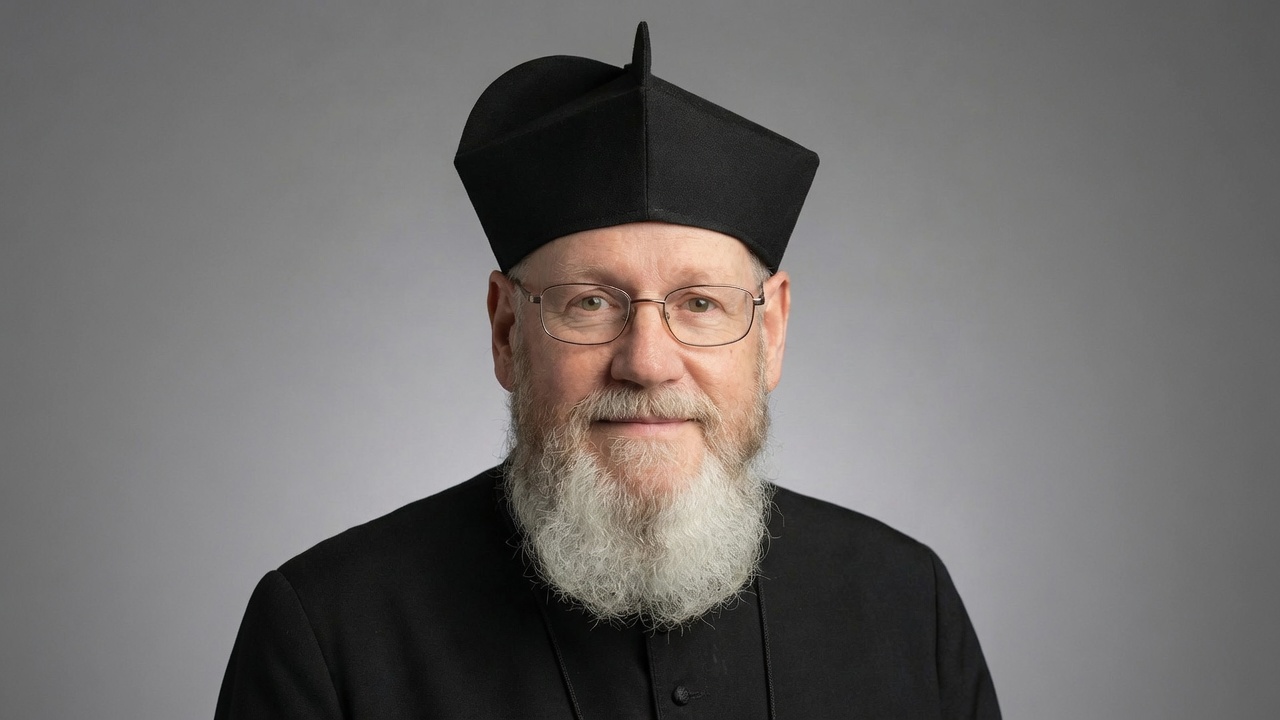
The Sons of the Most Holy Redeemer (FSSR), a former SSPX-affiliated group, now appear more SSPX than ever and increasingly closer to sedevacantism.
After their dispute with the Bishop of Christchurch in New Zealand over alleged exorcisms carried out without approval, the Sons of the Most Holy Redeemer have appeared increasingly critical of the Church. More recently, there are indications that they may be moving toward separation, even bypassing the SSPX— their former sister organization, which remains in full communion but without canonical status.
Their tone has increasingly come to resemble that of sedevacantist circles—just one pope short—where frustration with the Church’s current crisis leads to the conclusion that leaving the Church is the only viable response, since they believe there has been no valid pope since the Vatican II era.
To convince their followers and the public that they are right, they presented some data on how the Church ended up in its current state, almost like a summary of Taylor Marshall’s book Infiltration, which I could only recommend with caution. They then concluded with the following declaration:
Therefore, we declare:
1. The Church has been infiltrated by enemies from at least the time of Pope Gregory XVI.
2. The Freemasonic heresy of Indifferentism, combatted by Popes for over 200 years before Vatican II, was clearly taught at Vatican II by the false authority of false churchmen.
3. The papal pretenders from Paul VI through Leo XIV have taught and acted in flagrant contradiction to the undoubtedly Catholic pre-Vatican II Popes.
4. Since the Second Vatican Council, the apparent Popes have caused a spiritual catastrophe of the greatest imaginable proportions.
5. The new doctrinal, moral, liturgical, and disciplinary decisions since Vatican II cannot be accepted because they contradict what came before.
6. Accepting the false teaching of Vatican II separates us from the Catholic Church.
7. A Catholic cannot recognise a man as the Vicar of Christ and resist his teachings in matters of Faith and Morals, nor can he resist his commands in matters of discipline and liturgy.
Therefore, we call for an Imperfect General Council, a meeting of all Catholic bishops of the world who have kept the true faith, to pronounce on the status of the present papal pretender, Leo XIV, and on the status of his Conciliar Church predecessors.
And until such Imperfect General Council is convoked and its investigations are concluded, and until papal clarifications are issued, we cannot accept the current pretenders to the papacy from the time of the Second Vatican Council.
Suggested Book: Listen to this book for free with Amazon Audible Standard Free Trial using this link.
An “imperfect general council” is a theoretical idea where bishops from around the world would gather during a serious Church crisis to try to restore unity or clear up confusion, especially if there is uncertainty about leadership. Its possible benefit would be better coordination and clarity in an extreme emergency. However, it is not part of the Church’s normal way of operating today, it has no established authority in current Church law. In theory, such a gathering could lead to either good or bad results. At present, I am neither for nor against this proposal.
There is too much to unpack in their 21-page statement, so I would simply like to summarize what I believe they got right and where I think they went wrong.
It is right for the FSSR to voice their disappointments. It is right for them to let their flock and the public know that some people in positions of power within the Church have acted immorally and caused scandal. It is right to take the crisis in the Church seriously instead of pretending everything is fine. It is right to defend traditional Catholic teaching, reverence in the Liturgy, and doctrinal clarity. It is right to warn against genuine theological confusion, modernism, and abuses that have harmed many Catholics. It is right to encourage seriousness about the Faith, prayer, sacrifice, and tradition. It is also right to remind Catholics that obedience should not be blind or detached from truth and conscience.
On the other hand, and this is a problem often associated with radical traditionalists in general, even I, in unavoidable situations, can be guilty of some of these actions. By publicly using insulting language against the hierarchs in Rome and presenting their cause in a way that resembles sedevacantism, they risk placing their own judgments above the visible authority of the Church. Their rhetoric can lead followers toward distrust of the papacy and the hierarchy as a whole. It may push some people toward practical sedevacantism, even if they do not formally embrace it. They can also give the impression that the Church has fundamentally failed or defected, which contradicts Catholic teaching on the indefectibility of the Church.
Suggested Book: Listen to this book for free with Amazon Audible Standard Free Trial using this link.
They seem to treat every disagreement, ambiguity, or bad pastoral decision as proof that Rome has lost legitimacy. This creates an “us versus them” mentality where only a small remnant is seen as preserving the true Faith. They also risk separation from ecclesial unity through self-directed actions that disregard warnings from Church authority. Their heavy focus on infiltration and corruption narratives can produce fear, suspicion, and spiritual instability among followers. Worse, it may scandalize ordinary Catholics by implying that those in communion with Rome are all compromised or deceived.
In short, they seem to forget that the Church remains one, holy, catholic, and apostolic because Christ Himself is her Head. Human sinfulness within the Church does not destroy those attributes. Yet their statement risks convincing people otherwise.
A balanced Catholic would acknowledge that there are real problems in the Church and that some criticisms are justified, while still rejecting schism, avoiding extremes, remaining faithful to the papacy — meaning the office itself, not necessarily every personal statement or opinion of a pope — and remaining faithful to the visible Church, trusting that Christ continues to guide His Church despite the sins, failures, and confusion of men.
Will the Transalpine Redemptorists eventually be declared in schism? I think they may have already begun moving in that direction through their defiance of local Church authority in New Zealand. Because of this, I think it may only be a matter of time before Church authorities in Scotland, where the society is based, issue a formal statement regarding their status.
It is sad to see traditionalist groups that claim to possess strong Catholic faith while at the same time disregarding the hierarchical structure Christ intentionally designed for His Church. In the long run, this creates instability — like building a house on sand instead of rock. The center remains the most stable position.
Let us pray and fast that God may soon grant a solution to the crisis in the Church. If the crisis continues unresolved, the exodus of people leaving the Church may only worsen, and more souls may drift further away from the valid and licit Sacraments.





Leave a Reply