For decades, the Society of St. Pius X has remained one of the most controversial movements in modern Catholicism. While many Catholics admire its defense of tradition and reverence in the liturgy, Church authorities have repeatedly warned that the deeper issue is not merely the Latin Mass, but ecclesial communion and submission to the Magisterium.
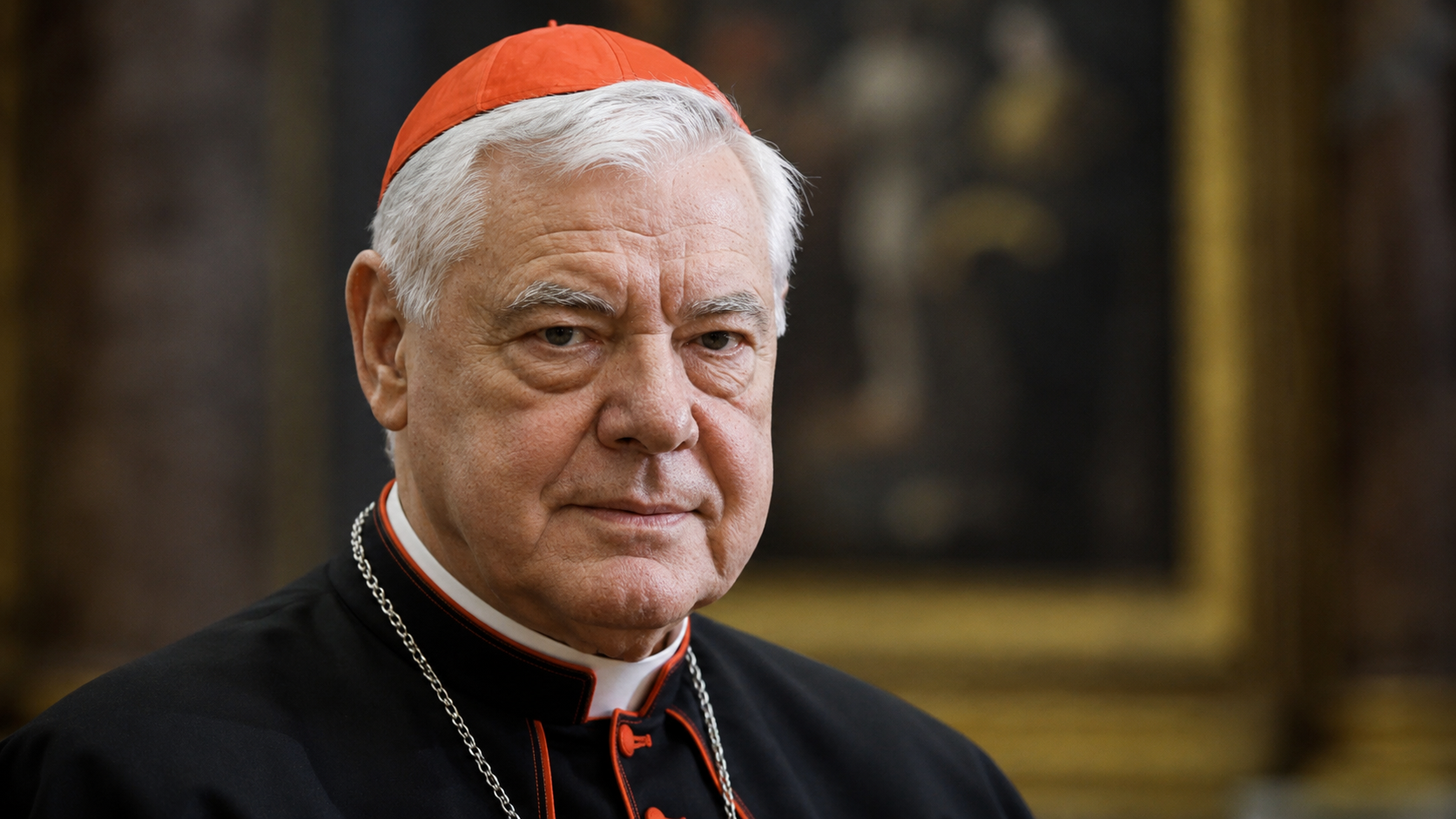
In an interview published by Kath.Net, Cardinal Gerhard Müller — former Prefect of the Congregation for the Doctrine of the Faith — offered some of the clearest and strongest statements yet on the SSPX, Vatican II, papal authority, schism, and the danger of setting oneself against the Church while claiming to defend tradition.
At the same time, he also criticized certain harsh restrictions placed on the traditional liturgy, showing a balanced but uncompromising approach.
Suggested Book
Here are 20 powerful statements by Cardinal Müller that every Catholic should read and reflect upon.
- The Society of St Pius X interprets religious freedom in line with the relativistic liberalism of the 19th century, which rejects revelation and reduces religion to a matter of taste and subjective feeling rather than truth.
- The objections of the Society of St Pius X to the ecumenical search for the unity of all Christians in the one Catholic Church, which finds its visible expression in the Pope, miss the point of the Second Vatican Council.
- They seem, however, to be oblivious to the contradiction with the Catholic faith that the Roman Pontiff is, in cases of doubt, the ultimate deciding criterion of catholicity.
- Benedict XVI hoped that lifting the excommunication would bring about the insight and conversion of the disciplined bishops of the Society of St Pius X, and who did not expect that some would interpret his great concession as weakness.
- The liturgy itself is not the problem, but rather the inaccurate accusation by the Society of St Pius X that the Catholic Church has deviated dogmatically from the Catholic faith,… that its [The Mass] sacrificial character has been obscured, if not denied, in favour of a mere memorial meal.
- Some have spoken of a schism, others have not. Officially, the matter was left unresolved so as not to solidify, through harsh formulations, the very situation that one was trying to overcome.
- The Society of St Pius X see themselves as a community of necessity, maintaining their distance until the millions of Catholics have returned to the Church that the Society of St Pius X preserved as the holy remnant of the one true Catholic Church.
- The Society of St Pius X should raise this voice within the Church, not against it, thereby creating the impression that heretical deviations into the atheistic rainbow ideology have been granted some kind of right to exist within the Church.
- One cannot be a good Catholic if one subjects binding pronouncements of the Church’s Magisterium to one’s own subjective standard.
- The Society of St Pius X would have to explain the difference between their position and Luther’s statement which shattered the unity of the Church and undermined its authority, when he said: “Even councils can err!” He thereby called into question the ultimate authority of the Pope and placed condemned heretics, who were rehabilitated as better interpreters of revelation, above the Magisterium.
- I myself considered the restriction on the celebration of Mass in the old rite to be pastorally very unwise, not because I am a follower of the old liturgy, but because as a Catholic, and especially as a theologian, one must also acknowledge the spiritual richness of the older rite, and there is no right to arrogantly elevate oneself above one’s friends.
- No one has a right to episcopal consecration, which belongs to the Church and not to individual groups, in order to guarantee the continued existence of its organisation according to purely human rights. Otherwise, the Church would disintegrate into interest groups.
- Even if the consecration by a schismatic bishop is valid, it cannot be dogmatically and morally justified by appealing to the salvation of one’s own congregation. Only in a state of extreme persecution would the consecration of a bishop be morally justified in conscience before God and in unity with the Pope presupposed by faith.
- The appropriate solution would be for the Society of St Pius X not to presume to dictate to the Pope the conditions for its full reintegration into the Catholic Church, but rather for it to recognise that one cannot be fully Catholic without full communion with Pope Leo XIV.
- It is to be hoped that the Society of St Pius X will not remain in its own self-contained circle, but will look at the Church as a whole and learn from the mistakes of Church history.
- One extreme does not justify the other. Neither so-called progressivism nor traditionalism.
- The Society of St Pius X is not a local church that could claim special status [Canonical rank as Eastern Rite]. It is merely a loose association of priests and laypeople who see themselves as a bulwark against the supposed errors.
- Those who wish to remain in the unity of the Church will profess their faith in Christ, the true foundation of its unity, but also in Peter.
- The Church can neither be destroyed by external enemies nor its truth undermined by internal errors. “One can fight the Church, but one cannot defeat her.”
- Only the Church of Peter has always remained steadfast in faith and free from error.
Suggested Book
Source: kath.net


Leave a Reply