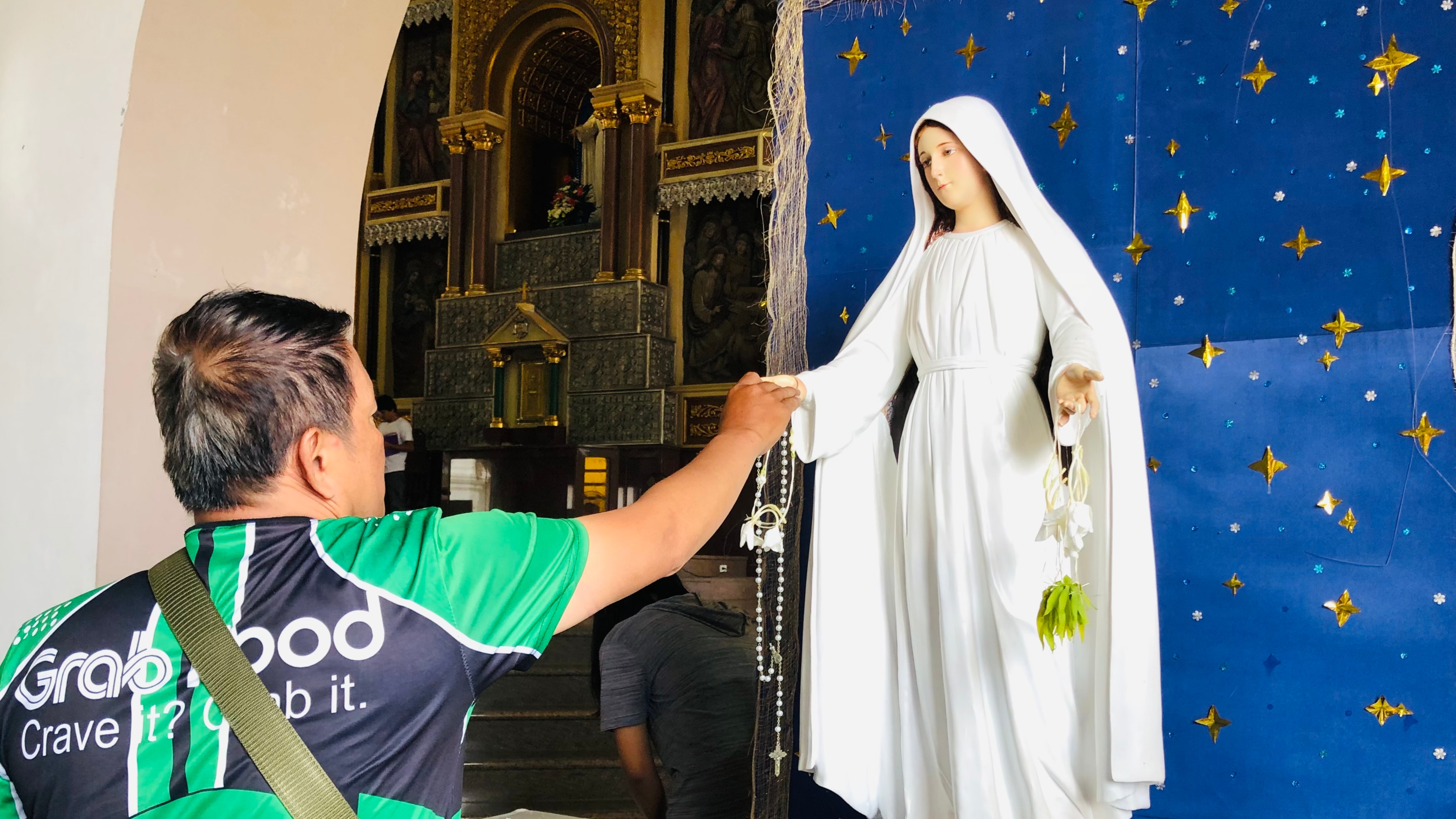
Vatican Doctrinal Note Mater Populi Fidelis: What It Really Says About the Marian Title Mediatrix
The new doctrinal note Mater Populi Fidelis, issued by Cardinal Víctor Manuel Fernández and approved by Pope Leo XIV, has stirred many emotions among Catholics, especially those devoted to Our Lady, Mediatrix of All Grace in Lipa.
Many have misunderstood its intention. Some Catholic media outlets and personalities have gone as far as declaring that the Church has now “rejected” the Marian titles Co-Redemptrix and Mediatrix. But that is far from the truth.
Cardinal Fernández himself clearly stated, “Rather than proposing limits, the present Note seeks to accompany and sustain the love of Mary and trust in her maternal intercession.”
In simple words, Mater Populi Fidelis does not aim to criticize or suppress any form of Marian devotion. Its purpose is to nurture, purify, and guide devotion to the Blessed Virgin Mary so that it remains Christ-centered and rooted in authentic Catholic faith.
It encourages deeper love and trust in Mary, while always keeping Jesus Christ as the focus of all worship.
Those who say the Church has banned the titles Co-Redemptrix and Mediatrix are spreading confusion. The document is indeed cautious, especially about Co-Redemptrix, but it never forbids the use of these titles. It merely asks the faithful to use them carefully, with a clear understanding of their meaning.
The title Mediatrix, in particular, is treated with gentleness and respect. It remains a valid expression of Mary’s motherly intercession for us before God.
Unchanged Catholic Doctrine
Had Cardinal Fernández truly intended to reject these Marian titles once and for all, he would have done so through a document of higher authority, something issued directly by the Pope himself, such as a motu proprio or an official amendment to the Catechism.
This is the same level of authority Pope Francis used when he declared the death penalty “inadmissible,” or when Pope Benedict XVI confirmed that Limbo “does not exist.” Only such a move could definitively change the Church’s teaching.
Why Catechism Paragraph 969 is the Definitive Proof
If the goal were total rejection, the Catechism of the Catholic Church, specifically paragraph 969, would have been revised. Yet this paragraph remains untouched.
It beautifully affirms that Mary’s maternal mission continues in heaven and that “she did not lay aside this saving office but by her manifold intercession continues to bring us the gifts of eternal salvation.” For this reason, “the Blessed Virgin is invoked in the Church under the titles of Advocate, Helper, Benefactress, and Mediatrix.”
This unchanged teaching itself proves that the Church still recognizes and honors Mary under these sacred titles. Mater Populi Fidelis only calls for clarity, not cancellation.
Theological Tensions
The tension surrounding these titles today arises not from heresy, but from poor catechesis and the growing influence of liberal Church leaders who prioritize false ecumenism over truth.
Theologians and saints of great brilliance once defended the titles Co-Redemptrix and Mediatrix not to glorify Mary above Christ, but to glorify God through her.
Yet today, these same ideas are being dismissed in haste by prelates who do not possess the theological depth of the intellectual and saintly heroes who once upheld these doctrines.
Within just a few years, the Dicastery for the Doctrine of the Faith has issued a note that seems to silence centuries of reflection, as if to appease the uncatechized, the apostate, and the non-Christian. To many, this feels less like theological discernment and more like bullying of a cherished belief.
In one image, Mater Populi Fidelis could be summed up as Cardinal Fernández, backed by Popes Leo and Francis, trying to suppress the saintly intellectuals who championed Mary as Co-Redemptrix and Mediatrix. But the faithful know that no earthly power can silence true Marian devotion.
The Authority of a Doctrinal Note
A doctrinal note does not define new dogma. It merely explains existing Church teaching in response to particular questions, and in this case, the Marian titles. It belongs to the ordinary Magisterium, which expresses the Church’s regular, non-infallible teaching authority guided by the Holy Spirit.
This is different from the extraordinary Magisterium, which infallibly defines dogmas such as the Immaculate Conception and the Assumption.
The faithful are called to give such a document what the Church calls religious submission of intellect and will. This means accepting it sincerely and avoiding scandal or confusion, even if one dislikes the Pope or Cardinal who issued it.
So long as it does not contradict Sacred Scripture and Sacred Tradition, Catholics are bound to respect it. Unlike the controversial Fiducia Supplicans, Mater Populi Fidelis does not attempt to change doctrine. Rather, it clarifies how Marian language should be used properly.
The truth is that the titles Mediatrix and Co-Redemptrix have always been theological reflections, not defined dogmas. They were never formally handed down from the Apostles, which means the Pope has the authority to guide how they are used.
Still, that authority does not erase the centuries of prayer, miracles, and devotion that have surrounded these titles, especially in places like Lipa.
Mater Populi Fidelis for Mediatrix Devotees
The doctrinal note gives careful and respectful attention to the Marian title “Mediatrix” and its variations. In paragraph 67, the note shows caution toward the phrase “Mediatrix of All Graces” when it is used carelessly, since it could be misunderstood as implying that Mary distributes graces independently of God.
Yet this very caution reinforces what Lipa devotees have always believed: that Mary mediates All Grace, that is, the one saving Grace of Jesus Christ Himself.
Her role is never separate from her Son but entirely united to Him, as the Mother who leads all souls to the fullness of His redeeming love.
Paragraph 68, however, provides an important balance. It acknowledges that the plural term “graces” can also be acceptable in a devotional sense, referring to the many favors that God grants through Mary’s intercession.
So, in a sense, the singular form “Grace”, as expressed in the Lipa title Mary, Mediatrix of All Grace, captures the deeper theological truth that every blessing we receive flows from one source: the Grace of Christ Himself.
The Mediatrix Devotion: A Living Witness to Christ-Centered Mediation
Mater Populi Fidelis does not silence the Lipa devotion. By invoking Mary as Mediatrix of All Grace, devotees affirm that her maternal intercession is always rooted in, and never apart from, the one Redeemer.
The Lipa title, far from being corrected, beautifully reflects the heart of Catholic teaching, that through Mary, the Mediatrix of All Grace, every blessing of God reaches His children.
Therefore, Lipa Mediatrix devotees can continue to honor the Blessed Mother confidently under the title “Mediatrix of All Grace,” as long as they understand the Church’s reminder: that Mary’s power of intercession comes entirely from her Son.
Christ alone is the Redeemer and Mediator between God and man. Mary, however, remains the most perfect human channel of grace. She is a mother who leads her children to Jesus through her prayers.
The doctrinal note, in truth, supports this understanding. It does not ban the devotion, nor does it deny Mary’s role as Mediatrix. It only asks for prudence and proper catechesis.
In this light, the Lipa devotion remains not a rebellion, but a living witness to Mary’s enduring love for her children.
May Our Lady, Mediatrix of All Grace, pray for us. May truth, charity, and faith always triumph over confusion and pride, both within and outside the Church.




Leave a Reply