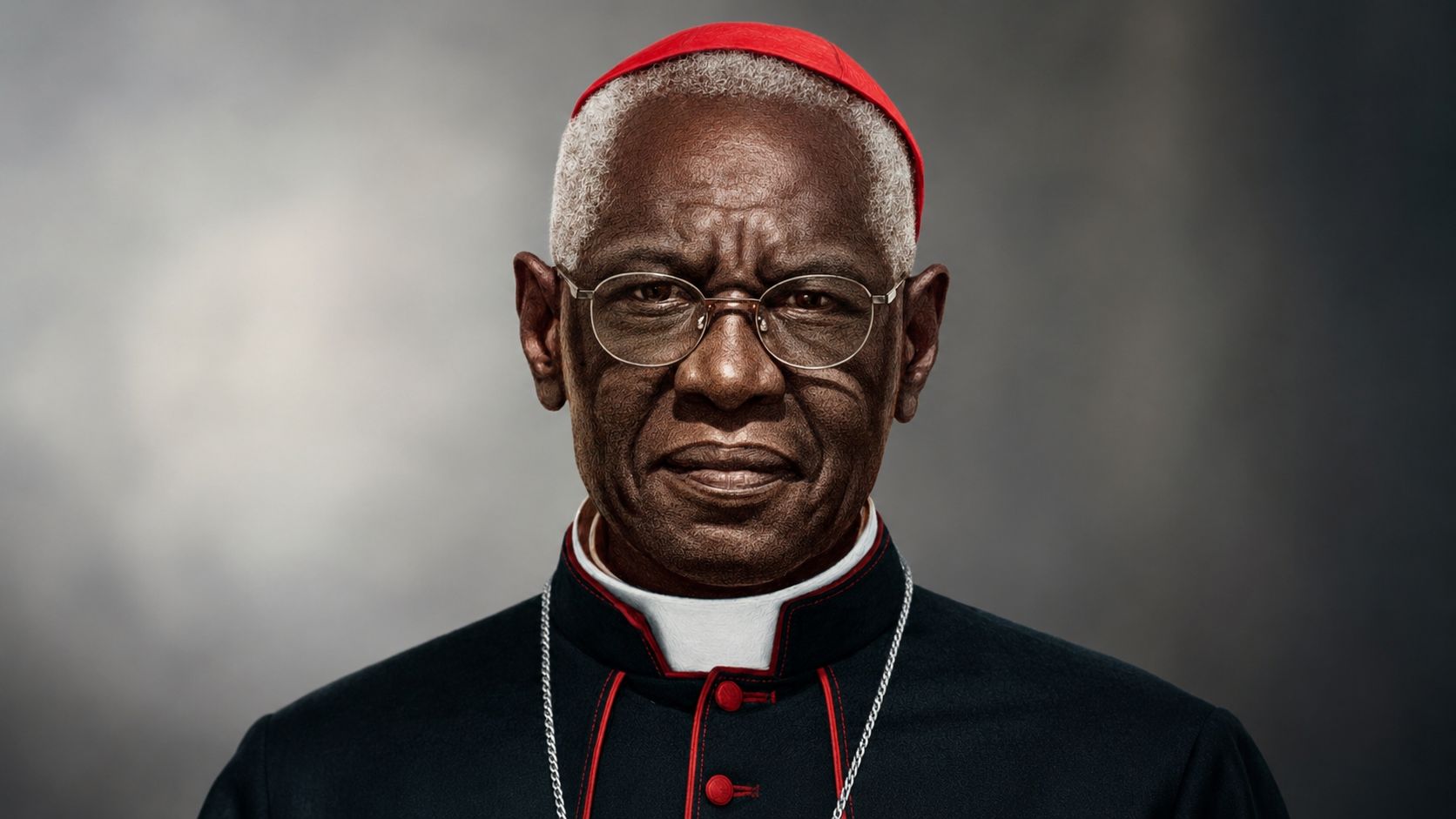
In a profound interview published by La Nef, Cardinal Robert Sarah, Prefect Emeritus of the Congregation for Divine Worship, reflects on the critical spiritual state of the modern Catholic Church. One of his concerns is the situation regarding the Society of Saint Pius X (SSPX), particularly following the announcement of planned episcopal consecrations even after warnings of schism from the Holy See.
For Cardinal Sarah, this situation is a source of intense sorrow, forcing a deeper reflection on how faithful Catholics must navigate liturgical changes, the creeping modern paganism within the Church, the weight of the post-Conciliar crisis, and the absolute necessity of hierarchical communion.
Suggested Book
Cardinal Sarah does not hide his sorrow regarding the SSPX’s impending canonical rupture. Commenting on the prospect of new bishops being ordained against the formal demand of the Holy See, he states plainly that the situation “remains objectively serious and it pains me deeply.” While Church law dictates an automatic latae sententiae excommunication for such an act, the Cardinal looks past the mere legalities to the spiritual damage: “An act of this nature would wound the visible unity of the Church even further.”
For Sarah, the fight to preserve traditional Catholic identity cannot be separated from the structure Christ established. He insists that “fidelity to Tradition cannot be separated from hierarchical communion.” However, he also cautions that authority must not be blind to the root causes of the friction, urging that “hierarchical communion… must never despise the suffering or the doctrinal questions that have accumulated.”
The Cardinal’s grief over traditionalist fractures is deeply tied to his critique of modern liturgical practices, which he believes drive many toward the SSPX. He warns against a modern form of paganism that has infiltrated the Church from within. According to Sarah, this “liquid ideology” manifests when Catholics “live in the midst of holy things without having the sense of God anymore.”
This insidious paganism directly impacts how the Novus Ordo Mass is frequently celebrated today. Sarah decries instances where the Mass is stripped of its transcendence:
“Paganism is not merely the worship of visible idols; it is also the loss of the meaning of worship itself. When faith is reduced to sociological language, liturgy to mere entertainment, morality to perpetual negotiation, and the Church to an institution that must adapt to the desires of the times, then something of paganism returns, not in ancient forms, but in the modern form of man placing himself at the center.” – Cardinal Robert Sarah
Suggested Book
For a Catholic navigating these liturgical shifts, the remedy is not ideological warfare but a return to the essence of worship. “The future of the liturgical question cannot be the war of sensibilities,” Sarah insists. “The liturgy belongs to the Church, not to parties.” Catholics must strive to restore “its sacred dignity, its continuity, [and] its orientation toward God,” remembering that the liturgy is fundamentally “the worship of the divine majesty.”
Addressing the tendency among traditionalists and conservatives to immediately condemn liberal popes for the Church’s current malaise, Cardinal Sarah offers a vital historical and spiritual perspective. He counsels against assigning the totality of the crisis to current leadership, arguing that the collapse of faith is a much larger historical movement. “It would be unjust to attribute to a single man a crisis that largely precedes him,” Sarah observes.
Rather than engaging in “worldly assessments” or treating a pontificate like a political mandate, Sarah reminds the faithful that the erosion of doctrine and the rise of horizontal, man-centered worship have been brewing for decades. He urges Catholics to treat authority with the “fear of God” and “charity,” avoiding “passionate simplifications” and understanding that the primary duty of pastors and laymen alike is to restore a “clearer, more peaceful, and more theological word to the Church.”
When asked if the documents of the Second Vatican Council require corrections—a central point of contention for the SSPX—Cardinal Sarah advocates for a hermeneutic of continuity. “I would speak first of clarifications rather than corrections,” he notes, emphasizing that a Council must always be read in continuity with the perennial faith.
Sarah acknowledges that certain areas—such as religious liberty, ecumenism, and the relationship between the Church and the modern world—have fostered a “hermeneutic of discontinuity.” However, he maintains that the Magisterium’s job is to deepen, not contradict, past teachings: “The teaching of the Church does not contradict itself. It is always the same since it is nothing other than the revelation transmitted by Christ.”
Faced with the imminent danger of a formal schism with the SSPX and the broader crisis of faith, Cardinal Sarah’s ultimate recommendation is entirely supernatural. He eschews political maneuvering or bitter debates, calling instead for spiritual warfare. To avert a permanent break in communion and heal the wounds of the Church, Sarah provides a simple, demanding path for the faithful: “I believe we must fast and pray so that the irreparable may be avoided.”
Suggested Book



Leave a Reply