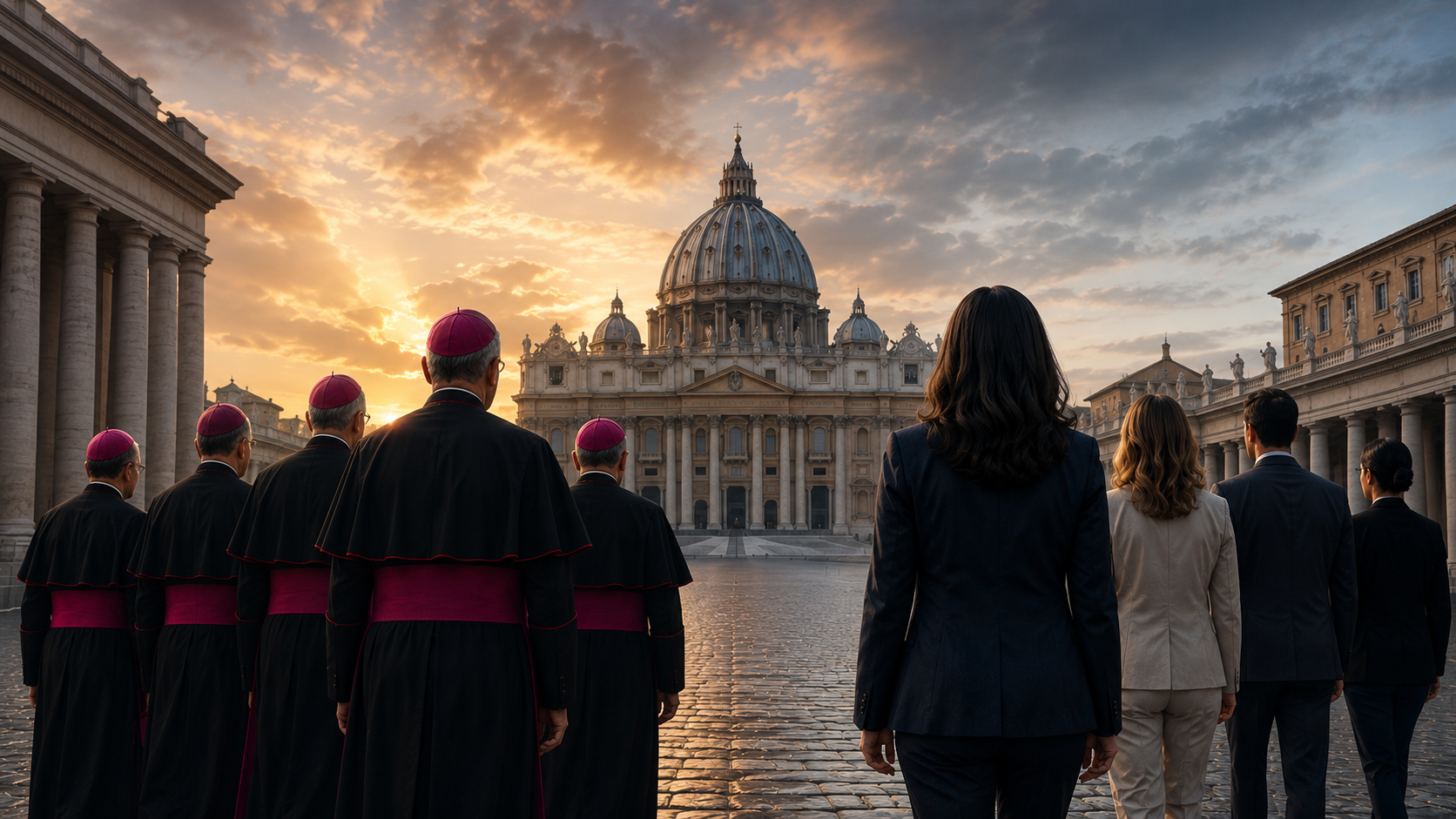
News just broke that Pope Leo XIV has appointed Maria Montserrat Alvarado, a laywoman and leader at EWTN News, as Prefect of the Dicastery for Communication. She will succeed Paolo Ruffini, the first layman ever appointed prefect of a Vatican dicastery under Pope Francis in 2018. Alvarado becomes the first laywoman to head a Vatican dicastery.
While I acknowledge Alvarado’s professional skill and generally sound reputation in Catholic media, I remain deeply concerned about the ongoing trend toward the feminization and laicization of the Roman Curia. Leadership roles in the Church’s central governance have traditionally been held by priests and bishops formed within the Church’s sacramental and hierarchical structure. This is not just tradition, but reflects the Church’s understanding of itself as a divinely ordered hierarchy, where Holy Orders carries both grace and authority for governing the universal Church.
In my view, Alvarado should have seen that it is not fitting for a layperson—especially a laywoman—to serve as a prefect and respectfully declined. At the same time, I recognize the practical difficulty: refusing might have led to a more ideologically problematic appointment. In that sense, there is some cautious relief that a competent and relatively conservative figure was chosen instead of a more progressive one. Still, that relief does not remove the deeper concern, since practical outcomes do not settle questions of principle.
We can learn from what happened in Catholic schools. In the past, priests, brothers, and nuns mostly ran them. The Catholic faith stayed strong and clear. Later, more laypeople joined. In some places, this opened the door to non-Catholics and even non-believers teaching subjects.
Even if they only teach math or science and not religion, there is still a problem. A teacher’s whole life — how they speak, act, and live — teaches students more than the actual lessons. Children watch and copy what they see in adults. If a teacher lives as if faith is not very important, students slowly learn that faith is secondary or optional. Over time, this weakens Catholic identity in the school.
The same worry applies to the Vatican Curia. The Dicastery for Communication handles the Church’s news, radio, website, and public voice to the world. The person in charge is a public face for the Church’s mission. Putting a layperson — especially a woman — in this top governing job can make the office feel less sacred and more like a regular office job. It risks making Church leadership look more like a modern company than the holy structure Christ gave us.
Some people will say, “Communications is different from other Church offices.” But every role in the Curia is part of the Church’s holy work. The person in that job shows how seriously the Church takes her own identity. If we keep adding more lay prefects and women in top roles, we may start to think priests are not really needed for leadership. That blurs the special gift of Holy Orders.
Some might accuse me of “clericalism” — by which is usually meant an excessive preference for clergy in ways that diminish the proper role of the laity, or a mindset that treats clerics as inherently superior in all functions of the Church, even beyond what their sacramental office requires. In that negative sense, clericalism can distort the Church’s life and undervalue the dignity and mission of the laity.
However, there is also a more legitimate sense in which strong clerical leadership is not only appropriate but necessary. The Church needs wise, courageous, and spiritually grounded priests and bishops to guide her, in continuity with Christ’s own design. Christ Himself chose and anointed the Apostles—men whom He entrusted with authority to teach, govern, and sanctify in His name. This is not accidental or culturally conditioned, but forms part of the Church’s foundational structure of leadership.
Given this, it is reasonable to ask why we so often set aside these patterns in favor of purely mundane reasons. Too often, decisions appear driven by modern managerial logic or short-term concerns, rather than fidelity to the Church’s received structure and spiritual wisdom.
The Church has always needed good lay helpers in support roles. That is fine. But mixing lay and clerical roles at the highest levels has real costs for the Church’s spiritual life and clear witness.
We should speak these concerns with love and honesty, even when the person chosen is not the worst option.



Leave a Reply