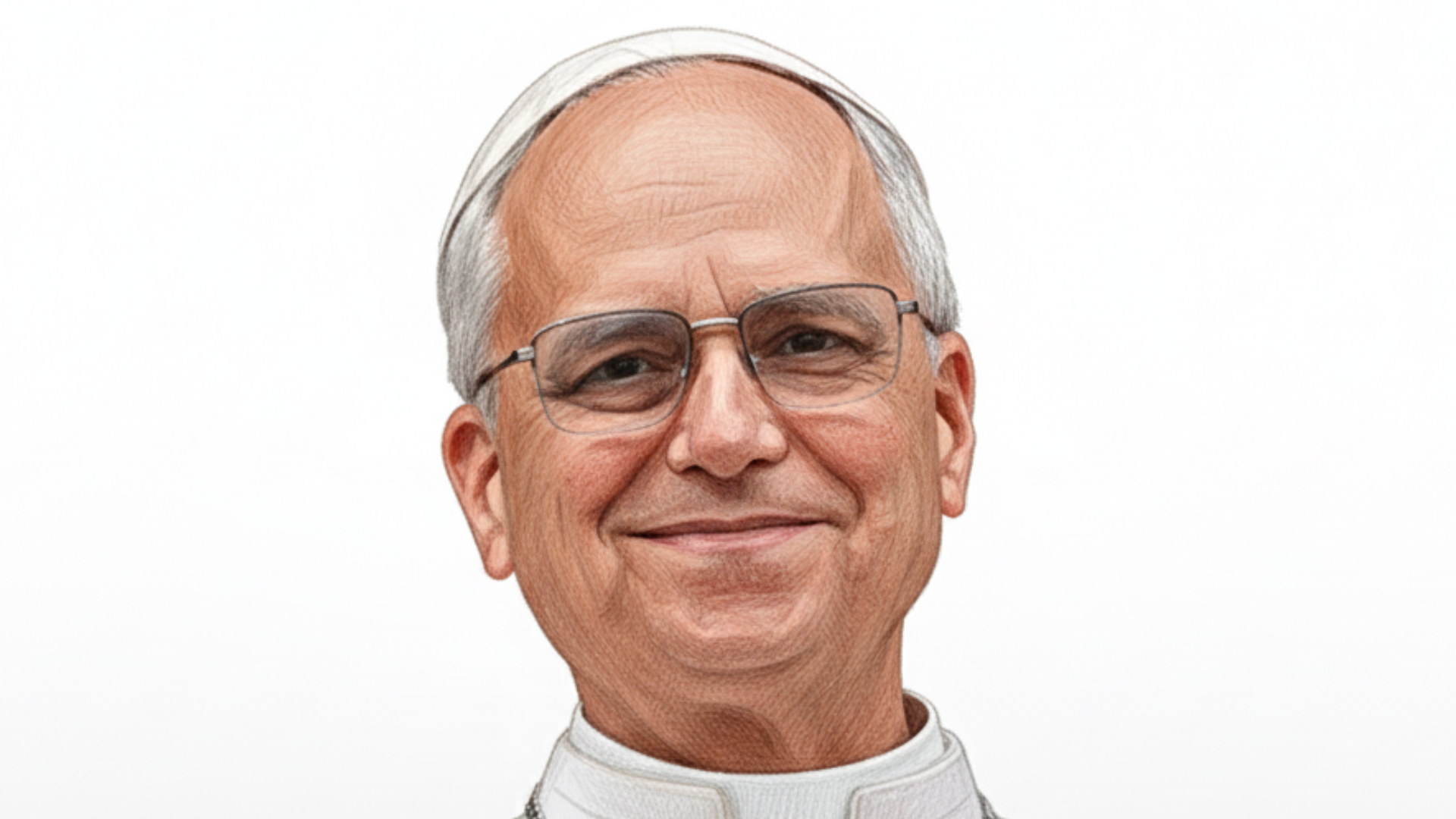
Dilexi Te (“I Have Loved You”) is the latest Apostolic Exhortation of Pope Leo XIV, addressed to the entire Church. Released on September 29, 2025, it serves as a continuation of Pope Francis’ 2022 Apostolic Exhortation Dilexit Nos (“He Loved Us”).
Remarkably, the footnotes of Dilexi Te alone include 60 quotations from Pope Francis, underscoring the continuity between the two pontificates in their emphasis on pastoral charity. This should be enough proof that Pope Leo has no interest in Tradition but is more inclined towards modernism.
An apostolic exhortation is a form of papal teaching that encourages the faithful to live out certain aspects of the Christian life. It does not define doctrine, but it carries significant pastoral and moral weight, reflecting the Pope’s guidance and emphasis on particular issues of faith and society.
Understanding the Message of Dilexi Te
In Dilexi Te, Pope Leo focuses on the Church’s love for the poor and her call to express charity through action. However, as with all papal writings, this document deserves both reverent reading and honest discernment in the light of Sacred Tradition.
The title Dilexi Te (“I Have Loved You”) is taken from Revelation 3:9, addressed to the Church in Philadelphia, the small, faithful group who “kept God’s word of patient endurance.”
In today’s context, this Church most closely resembles the small remnant of Catholics who hold firmly to Tradition and resist modernist influences, rather than the modernist Church now under Pope Leo XIV’s leadership.
What is striking is that this new apostolic exhortation makes no mention of repentance, confession, or reconciliation. In the Book of Revelations, when Our Lord speaks to the seven Churches, He calls them to repent.
True love desires conversion, and without that, love becomes sentimental. Pope Leo does mention “spiritual conversion” once, but only as one of many aspects of the Christian life, not as the heart of it.
Focus on Material Poverty Over Spiritual Renewal
The document lists many forms of poverty, economic, social, cultural, yet it does not speak of spiritual poverty. The focus is mostly material, as if the Church’s mission were primarily social rather than supernatural.
Dilexi Te and the Praise for the United Nations
Perhaps the most troubling part of Dilexi Te is Pope Leo’s praise for the United Nations, a secular institution that, while often speaking about peace and human rights, actively promotes policies contrary to Catholic teaching, including abortion, contraception, and gender ideology.
By commending such an organization without clear moral distinction, the document risks confusing the faithful and appearing to align the Church with institutions that stand against the sanctity of life and the natural order.
Much of Dilexi Te centers on the poor, often at the expense of worship. While the Holy Father briefly mentions the need to care for both body and soul, the weight of the exhortation clearly leans toward social action. It reads more like a long homily, filled with saints’ examples and moral encouragement, but with no emphasis on repentance and worship.
Pope Leo’s interpretation of “He has sent me to proclaim release to the captives” (Lk 4:18) seems overly literal, especially when he speaks about freeing actual prisoners (paragraph 62). The Lord’s words refer primarily to liberation from sin, not from legal imprisonment.
A Shift Away from Latin and Tradition
Like Pope Francis’s papal documents, the only trace of Latin in this papal document is its title. Gone are the days when Latin safeguarded the meaning of papal teaching from distortion. The abandonment of the Church’s sacred language reflects a deeper detachment from her Tradition.
The Holy Family is again presented as “migrants” in Egypt, a common theme among modern Church leaders in defense of open borders. But Egypt and Israel, in biblical times, were neighboring regions under shifting borders.
The Holy Family did not “cross borders” in the modern sense. Using this story to justify open borders and mass migration is misleading. True charity toward migrants must never disregard lawful order or national security. Poland, for example, shows that a country can uphold both charity and prudence.
Modern Language, Modern Challenges
Pope Leo writes that the Gospel is credible only when translated into “gestures of closeness and welcome.” These are the familiar buzzwords of modern liberalism, “building bridges,” “inclusion,” “accompaniment.” But a Church that builds bridges without stressing the importance of worship and repentance leads souls not to heaven but to eternal damnation.
While the Pope reminds us that love for God is proven by love for the poor, a truth taught by Christ Himself, he places no emphasis on the Eucharist and divine worship. The Lord manifests Himself in the Eucharist, in the Church, and in the poor. These three cannot be separated. But for those who promote liberal theology, the poor always comes first than God and his Church.
The Church’s True Mission in Dilexi Te
The Pope insists that “the preferential choice for the poor” will renew the Church and society. But this is more opinion than doctrine. The Church’s mission is to sanctify souls through the Sacraments; care for the poor naturally flows from the holiness of her members.
In fact, studies show that those who attend the Traditional Latin Mass are statistically more generous in charity. Pope Leo should really look into making the Tridentine Mass available in all parishes. Then, organic change will happen in favor of the poor.
Quoting St. John Chrysostom, Pope Leo reminds us that feeding the hungry comes before adorning the altar. This is true in context, when real hunger and need are present. But in much of today’s world, famine is not the Church’s central crisis; spiritual hunger is.
The Call to Charity and Spiritual Warfare
The Pope also warns that “doctrinal rigor without mercy is empty talk.” In principle, this is true, but his tone seems to accuse defenders of orthodoxy of being indifferent to injustice. If that is his intent, it is unfair, for orthodoxy itself is an act of charity, preserving truth that saves the souls of the current and next generations of Catholics.
He encourages almsgiving as a way of touching “the suffering flesh of the poor,” a timeless Christian duty. Prayer, fasting, and almsgiving remain the surest means of sanctification. We should all support this call regardless of our state in life.
Finally, the exhortation ends with lofty words on love, that Christian love “knows no enemies” and “sets no limits.” This, however, is naive. The Church has always had enemies, visible and invisible. To deny that is to forget that we are in spiritual warfare. A Church that refuses to name her enemies risks joining them.
Final Reflections on Dilexi Te
In the end, Dilexi Te is a heartfelt and socially conscious document that rightly calls Catholics to care for the poor and oppressed. Its concern for human dignity, justice, and compassion reflects genuine Gospel values.
Yet, it also reveals an imbalance, a tendency to place the material above the spiritual.
The exhortation’s repeated focus on social action, while noble, seems to overshadow the Church’s primary mission: the sanctification of souls through worship, repentance, and the Sacraments.
True charity flows from souls nourished by authentic worship and the grace of the Sacraments. When the Church forgets this order, she risks becoming another humanitarian institution rather than the Mystical Body of Christ.
Dilexi Te is good in intent, but it must be read with the reminder that only authentic worship gives birth to lasting charity.




Leave a Reply