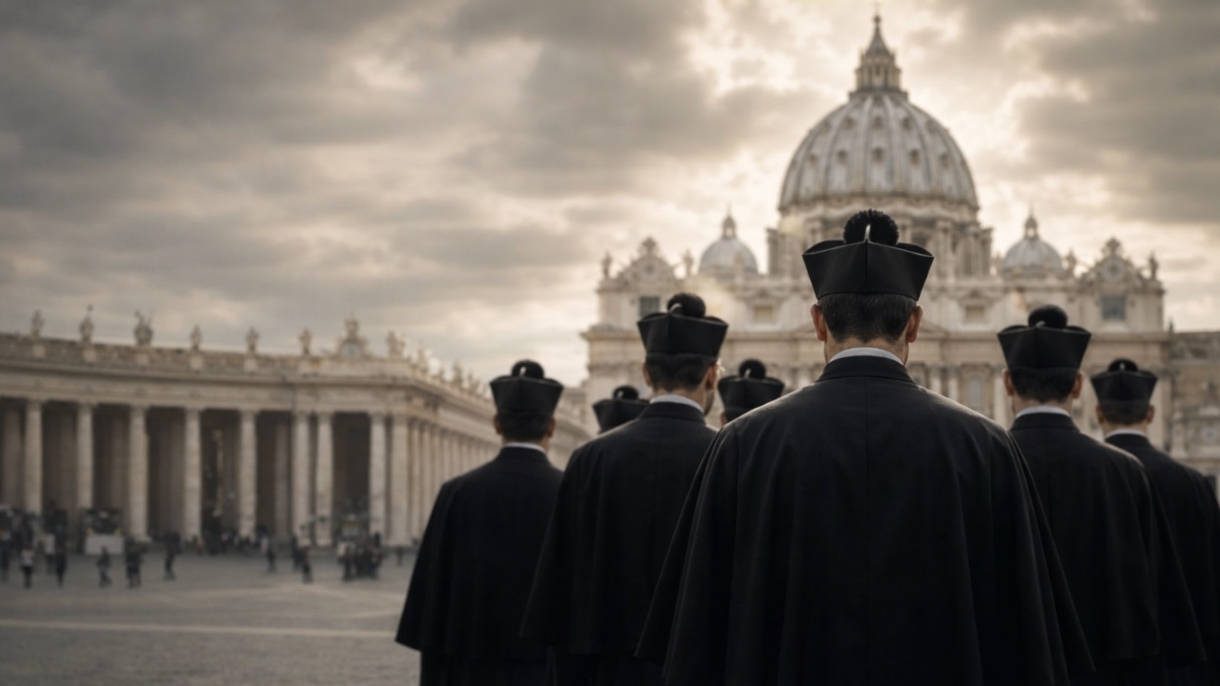
One of the biggest questions raised after the Vatican’s declaration on the Society of St. Pius X concerns Formal Adherence to the SSPX Schism: who is actually excommunicated? Many Catholics have assumed that anyone who has ever attended an SSPX Mass is automatically excommunicated. That is not what the Church teaches. Understanding Formal Adherence to the SSPX Schism requires distinguishing between merely attending an SSPX chapel and consciously embracing separation from the Catholic Church.
Before discussing the canonical criteria, I want to make a sincere appeal to members of the SSPX. Seek reconciliation with the Catholic Church. The Church always desires the return of those who are separated from her communion. Because SSPX clergy no longer possess the canonical faculties required for the valid celebration of Penance and Matrimony, Catholics should not approach them for these sacraments. Confessions heard by SSPX priests and marriages witnessed by them are now invalid because the Church no longer supplies the faculties necessary for their valid administration.
I discussed the invalidity of these two sacraments in my previous article Why SSPX Confession and Matrimony Are Invalid Now, where I argued that Fr. Gerald Murray and Cardinal Gerhard Müller are mistaken in claiming that SSPX confessions and marriages remain valid. Unlike Baptism or the Eucharist, the sacraments of Penance and Matrimony require not only valid ordination but also the necessary faculties granted by the Church. Without those faculties, the sacraments are invalid.
That conclusion was reinforced after reading Father Davide Cito, Professor of Canon Law at the Pontifical University of the Holy Cross in Rome. Father Cito explained that it is the SSPX’s formal schism and the canonical consequences flowing from it—not merely the Dicastery’s explanatory note—that remove the faculties required for priests to validly hear confessions and assist at marriages.
Canon lawyer Cathy Caridi, JCL, likewise confirms that faculties are indispensable for the valid administration of these sacraments. Her recent article on Canon Law Made Easy also addresses another important question: Who formally adheres to the SSPX schism?
Understanding Formal Adherence to the SSPX Schism
In Who in the SSPX Was Just Excommunicated, Caridi explains that the Vatican did not declare every person who has attended an SSPX Mass to be excommunicated. Rather, the Dicastery for the Doctrine of the Faith applied the principles already established in the 1996 clarification of the Pontifical Council for the Interpretation of Legislative Texts.
Formal adherence requires far more than attending an SSPX chapel. The Church does not impose excommunication simply because someone was present at an SSPX Mass. Instead, the penalty concerns Catholics who knowingly and deliberately embrace separation from the Catholic Church.
The Vatican’s explanatory note states that those who formally adhere to the SSPX are considered schismatics and incur the canonical consequences established by the Church. The decisive question, therefore, is not whether someone has attended an SSPX chapel, but whether he has consciously chosen to identify with the schism.
A Catholic who knowingly chooses the SSPX over communion with the Roman Pontiff and the bishops in communion with him demonstrates far more than a liturgical preference. If a person understands that the Society has entered into formal schism and nevertheless decides that the SSPX—not the Catholic Church—is where he intends to remain, he has moved beyond attendance into Formal Adherence to the SSPX Schism.
Caridi also explains that a person’s response after becoming aware of the schism is significant. A Catholic who sincerely desires to remain in communion with the Church would ordinarily seek reconciliation. By contrast, someone who knowingly persists in the schism, refuses reconciliation, and insists on remaining with the schismatic body demonstrates the disposition that canon law associates with formal adherence.
Formal Adherence to the SSPX Schism may also be manifested when someone actively encourages others to reject the Church’s authority, recruits Catholics into the SSPX after its declaration of schism, or publicly defends remaining separated from the Roman Pontiff despite knowing the Church’s judgment. At that point, the issue is no longer simply a preference for the Traditional Latin Mass; it becomes an embrace of ecclesial separation.
Ultimately, the essence of schism has never been about the Traditional Latin Mass itself. A Catholic may love the Traditional Latin Mass, respectfully criticize prudential decisions of Church authorities, or pray for the eventual reconciliation of the SSPX while remaining fully Catholic. Canon 751 defines schism as “the refusal of submission to the Supreme Pontiff or of communion with the members of the Church subject to him.” That remains the decisive issue.
What Does Not Constitute Formal Adherence to the SSPX Schism?
The Church does not judge Catholics solely by where they attend Mass. Attendance at an SSPX chapel, by itself, does not automatically establish Formal Adherence to the SSPX Schism. A person may have attended out of ignorance, before learning of the Vatican’s declaration, or because of confusion regarding the Society’s canonical status.
Likewise, a Catholic who continues to recognize the authority of the Pope, remains committed to full communion with the Catholic Church, and sincerely hopes for the reconciliation of the SSPX does not automatically incur excommunication merely because he once attended an SSPX Mass.
As Cathy Caridi’s analysis makes clear, the Church examines not only external actions but also a person’s knowledge and intention. The decisive question is whether one has knowingly and deliberately embraced separation from the Catholic Church. That is why Formal Adherence to the SSPX Schism cannot be reduced to attendance alone. It concerns a conscious and persistent decision to reject ecclesial communion, not simply a preference for the Traditional Latin Mass.
This distinction protects two important truths. It prevents Catholics who innocently attended an SSPX chapel from being wrongly labeled as schismatics, while recognizing that those who knowingly and deliberately reject communion with the Roman Pontiff have crossed the line into Formal Adherence to the SSPX Schism—the very situation addressed by the Dicastery for the Doctrine of the Faith and explained by Cathy Caridi.


Leave a Reply