On September 7, 2025, the Church officially declared Saint Carlo Acutis a saint. His canonization in Rome, alongside Blessed Pier Giorgio Frassati, was a historic moment for Catholics worldwide. Many celebrated the fact that a young man from our own times, who loved computers and the internet, has now been raised to the altars.
But as we rejoice, it is important to look deeper. Canonization is not just about celebrating someone’s lifestyle. It is about recognizing a life of heroic virtue and deep union with Jesus Christ. Saint Carlo’s story teaches us many things, but here are six important points to remember.
Carlo is not a saint because he was “cool” or “modern.”
Many Catholics, especially those poorly catechized, highlight Carlo’s hobbies: his use of the internet, his casual style, or his youthful energy. While these details make him relatable, they are not the reason for his sainthood.
If people only share posts about “the cool saint with a computer,” non-Catholics and non-practicing Catholics may think that sainthood is simply about being kind, trendy, or socially active. This overlooks the true cost of holiness: daily self-denial, prayer, sacrifice, and complete devotion to Christ.
Carlo did not become a saint because he made a website. He became a saint because he loved Jesus in the Eucharist above all things. His work on documenting Eucharistic miracles was just the fruit of that devotion. His “cool” life was never the cause of his sanctity, only an expression of it.
Saint Carlo Acutis received Holy Communion reverently.
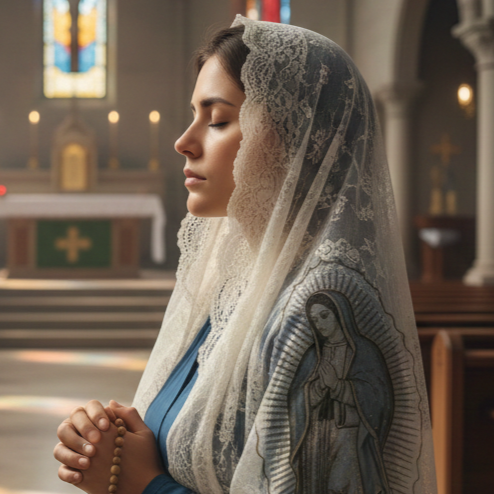
At the center of Carlo’s life was the Eucharist. He attended daily Mass and received Holy Communion on the tongue with reverence. This is often ignored or downplayed.
Modernists avoid mentioning it because they do not want to promote what they see as “rigid” practices. Meanwhile, some ultra-traditionalists dismiss Carlo’s example, assuming that because he lived after Vatican II, he must have received irreverently. Both are mistaken.
The truth is that Carlo loved Our Lord deeply and expressed that love by how he received Him. Receiving on the tongue is one of the clearest external signs of adoration. His devotion reminds us that the mode of receiving Christ matters, because it reflects the faith we profess.
The canonization process has changed, but holiness has not.
It is true that the Vatican has simplified the canonization process in recent decades. Some worry this lowers the standard. But this does not mean that true saints are not being canonized.
Consider St. Teresa of Calcutta and St. John Paul II. Both had relatively fast processes, yet their holiness was undeniable. They lived heroic virtue visible to the world and drew countless souls to Christ. The same is true with Carlo. The Church may move faster today, but genuine sanctity is still the foundation.
Canonization only gives moral certainty.
The Church does not declare who is in Hell, nor does she canonize everyone who dies. Canonization gives the faithful moral certainty that a particular soul enjoys the Beatific Vision.
The Catechism (CCC 828) teaches that saints are raised up by God for the good of the Church, to be models of holiness and intercessors for us. When the Pope canonizes someone, it is not about celebrating personality or achievements but confirming that this person lived and died in God’s grace and therefore can intercede for the rest of the faithful. Saint Carlo Acutis is now officially proposed for the whole Church as an example to follow.
Money is involved, but for a reason.
Critics often complain that canonizations involve money, and this is true. Investigations, documentation, travel, and ceremonies in Rome all require funding. Without resources, many venerables and blesseds remain unknown beyond their local regions.
This does not mean canonization is “for sale.” It means that spreading devotion, publishing testimonies, and organizing the canonization liturgy needs practical support. Countless holy men and women are not canonized simply because there is no financial means to promote their cause. The money spent allows the wider Church to hear about saints like Carlo and to be inspired by their lives.
Miracles are carefully investigated.
Some mock the idea that one or two miracles can make someone a saint. But miracles required for canonization are not accepted lightly. They undergo rigorous investigation by medical experts, theologians, and Church authorities. Only when there is no natural explanation does the Church give approval.
In Carlo’s case, the Vatican recognized miraculous healings. But beyond these, we cannot ignore the “unofficial” miracle of healings and conversions. Even at a young age, his joy and Eucharistic devotion inspired many to return to Christ. This invisible fruit of his life may be the greatest miracle of all.
Conclusion
Saints are made by the Eucharist. Carlo Acutis was officially proclaimed a saint of the Catholic Church. His canonization is a reminder to all of us that sainthood is not about being modern, stylish, or relatable. It is about loving Jesus Christ with all one’s heart.
Carlo’s love for the Eucharist was the source of his holiness. His work, his kindness, his joy, and even his hobbies flowed from that devotion. Saints are always made at the altar of Christ. Carlo shows young and old alike that true modernity is to live the timeless truth: that the Eucharist is the source and summit of the Christian life.